by Claire Doole | Oct 7, 2026 | Blog
The short answer is not much. In most cases, it goes in one ear and out the other!
Studies show that people forget half of what you say almost immediately; by the next day, it drops to a quarter and a week later, just a tenth.
That is pretty dispiriting given how long people spend preparing presentations.
However, help is at hand from the research of the German psychologist Hermann Ebbinghaus, who at the beginning of the last century pioneered “The Forgetting Curve”.
Ebbinghaus not only showed that the human brain is extremely poor at retaining the spoken word, but he also gave us clear instructions on how to overcome this memory challenge.
In my workshops and coaching sessions, I play a memory game based on Ebbinghaus’s research. Wherever people are from, however educated or linguistically skilled they are, they all tend to remember and forget the same things. Remarkably, we all have the same brain, and it works in the same way, whoever we are!
How to craft a presentation that people will remember
First, let me share the results of the memory game:
1. People remember the first, and last things they hear. Ebbinghaus called this the primacy and recency effect.
2. They retain information that is repeated – although more recent studies show they recall even more if it is repeated using similar but different words.
3. They like information that is relatable to them, and that is linked or grouped by theme.
4. They also remember information that stands out or is unusual. At journalism school, we were always told dog bites man is not a story, but man bites dog is!
What does this tell us about how we should structure a presentation that people will remember?
1. Front-load and back-load your key points, as this is when the audience’s attention is at its peak.
2. Repeat information in a variety of ways to keep interest.
3. Group your ideas around clear messages so that they are easy to retain, and illustrate them with stories to build emotional connection.
4. Think like a journalist – what is going to surprise your audience? What arouses their curiosity and sparks their interest to pay attention to what you say?
5. Work extremely hard in the middle of the presentation to stimulate their interest, as this is when our recall is at its lowest. Use stories, striking facts, and strong visuals/audio/video to keep your audience attentive.
Ebbinghaus didn’t research whether people retain more from reading than listening.
But the good news for those of you reading this blog is that modern studies show high levels of retention when you read as you are not tempted to daydream or multitask.
With this in mind, do share this with friends and colleagues, and get in touch if you want to prepare and practice a presentation that people will remember!
by Claire Doole | Oct 19, 2020 | Blog, Presenting
“It ain’t so much the things that people don’t know that makes trouble in this world, as it is the things that people know that ain’t so.”
This is one of the many quotes attributed to 19th Century American writer Mark Twain and it definitely applies to presenting.
Many people think they are good presenters – mostly because people are too polite to tell them they are not, or in the case of senior people because no one dares tell them!
Presenters themselves also have a blind spot. This month I was asked to train a number of speakers taking part in virtual conferences. I blocked time in my diary and waited for the Doodle calendar to fill up. Two things happened – some people were too busy, others left it to the last moment.
This only confirmed to me another great quote about public speaking. This time by the American comedian, Jerry Seinfeld, who said:
“According to most studies, people’s number one fear is public speaking. Number two is death. Death is number two. Does that sound right? This means to the average person, if you go to a funeral, you’re better off in the casket than doing the eulogy.”
People who don’t like public speaking tend to put off preparing their presentation until the last minute.
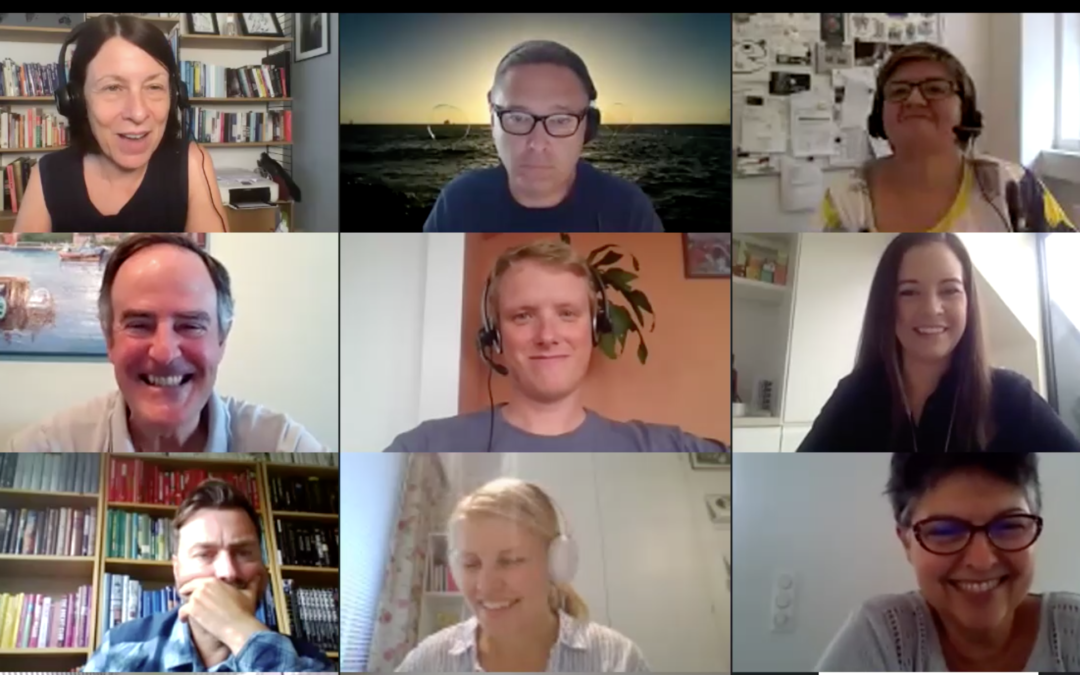
The reason though I believe people did finally sign up was because it was pitched as engaging presenting in the virtual world. The world of Zoom is unforgiving. If people are bad at presenting in the real world, their mistakes are amplified virtually. You simply have to be better – powering up your visual, vocal and verbal channels of communication – in order to break through the digital screen and hold attention.
5 quick tips on engaging virtual presenting
• Establish onscreen presence – You are now a television presenter, so you need to make sure you are looking directly in the camera and having a conversation with it as if you were talking to someone in person.
• Think about your audience – If you want to break through the digital screen and get their attention, you have to meet their expectations. What do they need to know? How does your presentation help them?
• Keep it simple and straightforward – What is your big idea and what are the three key messages you would like your audience to take away? You need to peel away the layers of complexity so people understand immediately what you are saying.
• Make it memorable – Use the SUCCESS model to create messages that stick. They must be simple, unexpected, concrete, credible, emotional and don’t forget to illustrate a key message with a story to build connection.
• Rehearse, rehearse, rehearse – Professional television presenters do, so like them you must know what you are going to say and never go over time!
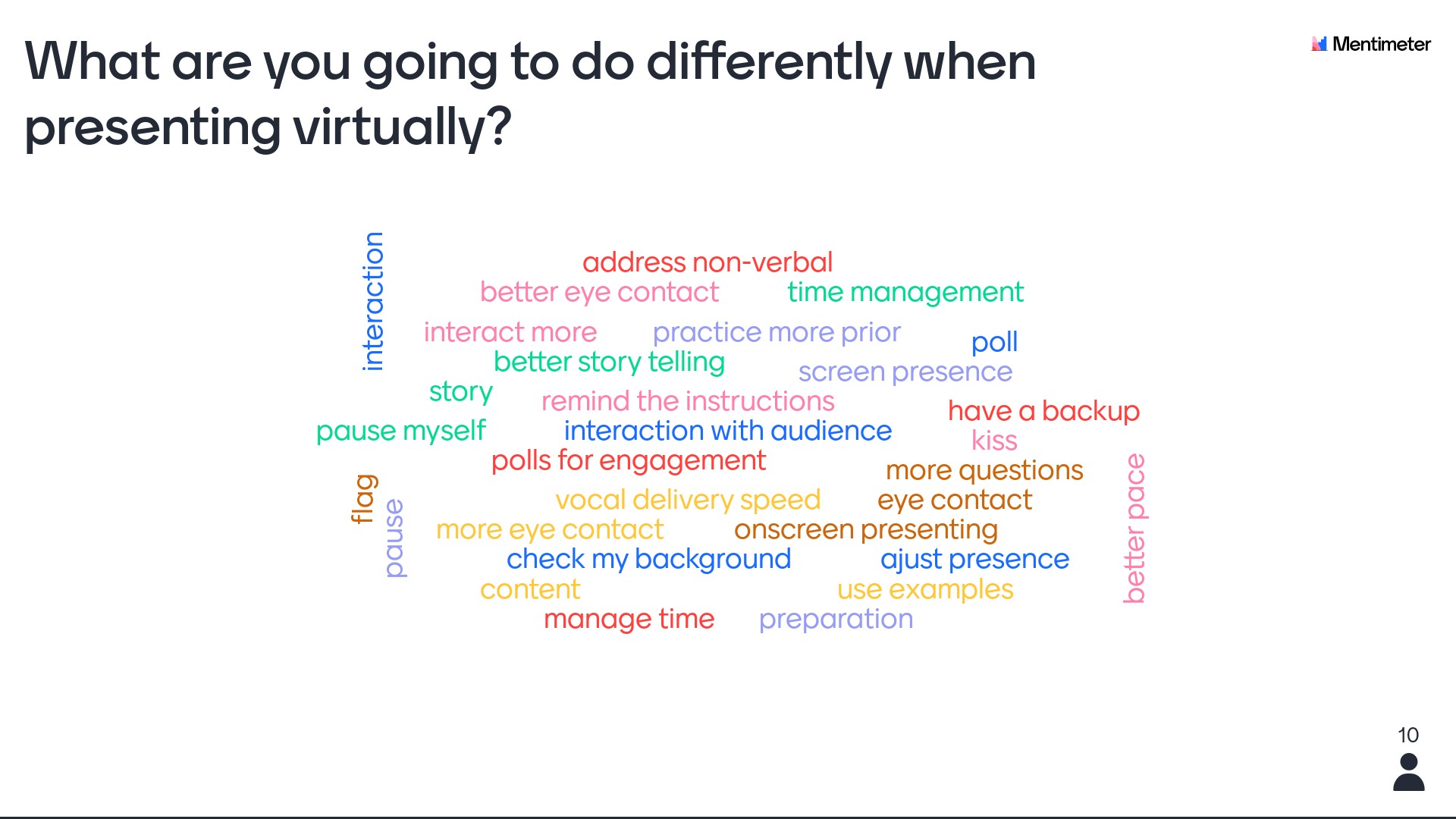
If you would like to learn more about engaging virtual presenting attend one of my group workshops or if you would like to get feedback on your virtual presenting skills attend a smaller group workshop or get in touch for some individual coaching.

by Claire Doole | Apr 28, 2019 | Blog, Public Speaking
Every conversation is a presentation, and no conversation has higher stakes than a job interview. To succeed, you need to convince a potential employer you are the right person for the job.
Over the past year, I have been coaching people in the art of the effective job interview – with a 100% success rate so far. This is probably due to the fact that so many aspects of presenting yourself to a future employer rely on presenting and public speaking skills – my areas of expertise.
Here are some tips essential to effective presenting that can be applied to the job interview.
Put yourself in the shoes of the your audience
Look at every question from the employer’s perspective and do your homework. This means doing a detailed research of the company and what their needs are both today and in the future. With this information, you can explain your assessment of their challenges and opportunities and why you can help them meet them.
For example, when asked why are you interested in the job, you could reply:
“I’ve had twelve years in customer service positions, with four years managing the whole department. Your position clearly demands a strong service component in areas where I have expertise.”
Highlight the benefits to the audience
What is in it for them? This is very important to spell out when presenting and indeed training, but especially so in a job interview. They are hiring you to meet a new challenge or solve a problem. You need to show them you are the ideal solution.
Often the first question in a job interview is along the lines of present yourself/tell us about yourself or what do you do?
You need to mention what you do but also highlight the value it brings to them.
If I were to do this for my business to a prospective client working for an international organisation, I would say:
“I am a former BBC journalist, UN spokeswoman and head of media at WWF International,(features) with more than 15 years as a trainer helping international organisations communicate more effectively (benefits). This means I can advise you on how to better influence policy decisions on X in Y country (added value).
This technique can also be used at a networking event when you have to present yourself and your business. In this instance, you may want to create interest and provide a potential hook by saying something intriguing to encourage them to ask more. It is known as an elevator pitch in that you should be able to deliver it to your dream prospect that you bump into by the time the elevator has gone from the top to ground floor.
Back up your assertions with proof points
In an interview you will often be asked about why you are the right person for the job. Here you need to identify what makes you stand out from the competition.
The easiest way to do this is to make a point and then give an example.
“I have an excellent track record in helping manufacturing companies make a profit. My team looks to see where they can cut costs or increase their margins. With a typical client, we can boost their profits by 7% in the first year. With one car manufacturer we worked with a couple of years ago we recommended a lot of changes and their first-year profit went up by 15%.”
Planned spontaneity
These types of answers need to be prepared before but delivered as if this is the first time you have said them. Strange as it may seem, this means you need to practice delivering them in front of the mirror or even better film yourself on your smart phone. You also have to make sure that your tone and body language give a positive impression.
In future blogs, I shall share how to use the right non-verbal communication, apply storytelling techniques and handle some of the trickier questions that you may be asked in a job interview.

by Claire Doole | Jan 23, 2019 | Blog
Next time you present to colleagues at work or in public, think about using a prop.
A prop, a term used in the theatre, arouses the senses. Studies show that people learn and retain information much better if it is reinforced with visual aids. If they can touch, feel, smell or listen to these aids, then it is even more likely they will remember what you are saying.
In my public speaking courses, I often give this prop to participants to see how they react.

People realise it is a very simple music box and when they wind it up, it plays the EU anthem Ode to Joy. Then they read the words – “it won’t work by itself” – a perfect metaphor for the message of the developer, a Polish EU official, who uses it to encourage citizens to engage with the European Union.
But let me walk the talk, by showing you three short video clips of some of the speakers I coached at a recent UN TEDX who all used props effectively.
Props reinforce your message
Jasmine Abdulcadir, an obstetrician and gynaecologist who opened Geneva’s first clinic for women suffering from female genital mutilation received a standing ovation for her talk debunking the myths around FGM and female sexuality.
One of the myths is that women, who have had their clitoris cut, lose all sexual sensation. In fact, as Jasmine explains showing a model of the clitoris, the tip is a tiny part of a big deep organ, and that removing it does not mean women can’t experience sexual pleasure.
It was important to also show MRI scans and diagrams of the clitoris in the talk – amazingly it was only in 2018 that Geneva hospitals ran a course for medical students on the history, anatomy and biology of the clitoris; and it is only this year that an accurate drawing of the organ will be shown in biology textbooks in French speaking Switzerland!
Here is her talk.
Jennifer Shigoli, a social entrepreneur from Tanzania, developed reusable sanitary pads, a solution for many girls and women who were using feathers, paper and rags as they couldn’t afford to buy throwaway pads every month. She took us on her journey as a successful businesswoman manufacturing pads that have reduced the rates of absenteeism in schools and improved the livelihoods of the men and women who sell them.
Here is her talk.
Elise Dietrichson and Fatima Sator are two researchers on a mission to tell the world that it was thanks to the efforts of four Latin American women that the UN Charter includes the words “women” and “sex”.
To illustrate the point, Fatima showed the pink version of the UN Charter – which was also put on the audience’s seats as a memorable take-away from the event.
Here is their talk.
Do’s and Don’ts
Props help you manage audience attention span, by adding variety, stimulating interest and are another tool in your presenting kit.
Below are some key points about using them effectively:
1. The prop must be relevant to your message – if it is not, don’t use it.
2. The audience must be able to see the prop – count to 5 as you show or hold it up.
3. Practice with the prop to ensure it works – make sure you are comfortable picking
it up or taking it out of your pocket.
4. Have a backup in case it doesn’t work – a photo on a slide for example.
5. Keep the prop hidden until you need it – this ensures greater impact.
6. Put the prop away when you are finished with it – as otherwise it can be a
distraction for the rest of your presentation.
Be creative
There are many TED global talks that are memorable for their use of props, such as Bill Gates opening a jar of mosquitos while delivering a talk about malaria or Jill Bolte Taylor using a human brain while talking about her massive stroke.
These add a sense of drama that works well with certain audiences. But, I encourage you to be creative in front of any audience.
If you work for a food company, use samples that can be touched, smelt or even tasted. If you work in manufacturing, trade or finance, your mobile phone can be a useful prop to talk, for example, about complex issues like global supply chains, as the parts are made all over the world.
Believe me, whatever your industry or organisation, props, if well used, will ensure your presentation is not forgotten.
by Claire Doole | Sep 4, 2018 | Blog
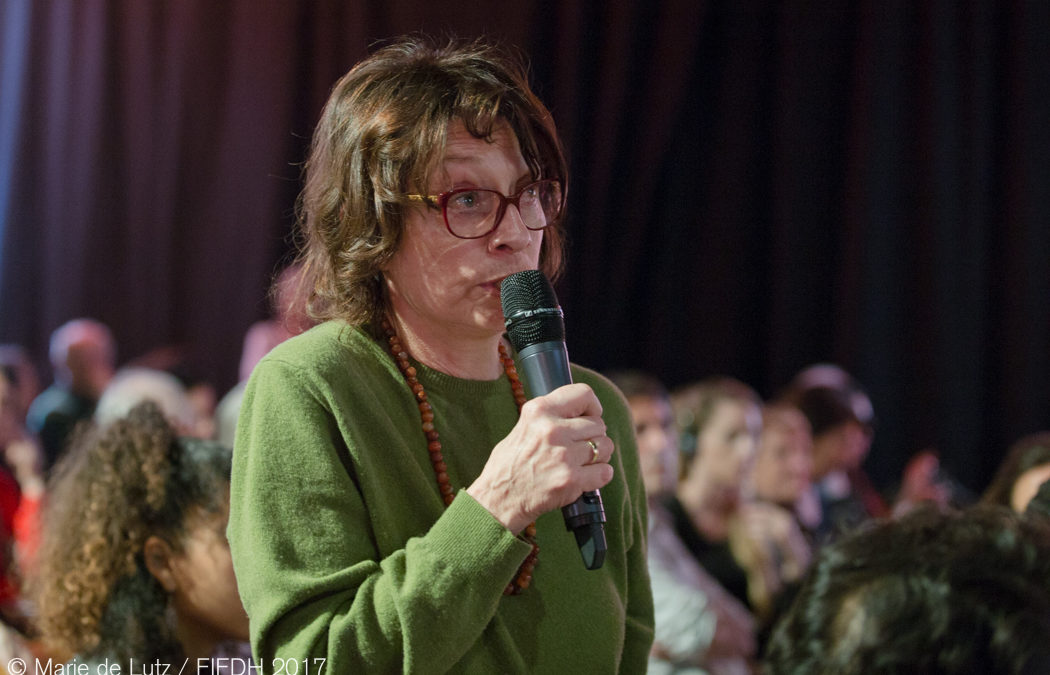
I was at a conference recently where during the Q and A session, the moderator failed to stop a woman from sharing her life experience as a refugee with the audience. Interesting, as it was how she ended up in Oxford from Myanmar, it was not relevant to the subject of the panel.
As the audience became restless with many rolling their eyes, the moderator did try to interrupt and ask for her question. She said she had no question but thought the audience should know about what she went through!
This made me think of how important it is as a moderator or as a presenter that you handle effectively the Q and A session.
Below are some tips based on my experience as a moderator and presenter who trains in both disciplines.
The audience member, who doesn’t ask a question, but makes a comment.
- Make it clear before you take a question that you want a question not comments.
- Take a leaf out of the book of Christiane Amanpour, the doyenne of CNN, when she moderated a panel at the UN in Geneva.
It is a technique that I find usually works but sometimes as Christiane discovered, it fails to deter the persistent. If this happens to you, you must wait for the person to draw breathe and politely interrupt for the sake of the audience and the panel members, as Christiane does here.
However, you may find, as I did, that certain audience members believe they should have been on the panel and therefore want to share their experience. This is fine as long as the organisers let you know beforehand that someone wants to intervene with a comment.
Handling the audience member who rambles
This happened to me during one of the first panels I moderated. The culprit was sitting right in my line of view so I went to him first. He made no sense as he started to read long passages from a text. I looked at the panellists to see if they understood, but found they were just as nonplussed.
I asked him to get to the point, but he continued to ramble. As the audience began to stir in their seats, I politely told him that we would answer his question in the break.
- Don’t wait until the audience become impatient before asking the questioner to clarify. If they don’t, tell them the panellists will answer their question after the event.
- Ask the organisers beforehand if there is anyone in the audience who is likely to make comments, or speeches. In this case, the person in question was a serial offender and had previously been asked to leave by security when he kept on talking without getting to the point!
Handling the audience member whose English is not understandable
This is my weak point. I speak French and German and am well aware how difficult it is to ask a question in public in a foreign language. I can be too indulgent and try and help the person too much to make their point.
- Seek clarification once, paraphrasing and checking back with them that you have understood.
- If this fails, ask if anyone in the audience can translate the question for the panel.
- Ask the organisers beforehand to provide simultaneous translation if they think the audience will benefit.
Handling the hostile questioner
In my experience this is more of an issue for the presenter/panellist than the moderator. However, the technique is similar.
- Listen actively – try to understand what they are really saying/mean and feel.
- As the moderator, you should understand and acknowledge their concern. As the presenter/panellist, you could reformulate the question positively and answer with what you know or believe. You can also involve the audience and ask their view.
- Closure – check back as the presenter/panellist or in some cases as the moderator that you have answered their question or addressed their concern.
Often people are nervous about the Q and A session, but if you take control you will earn the respect of your audience, panel and the organisers, not least because you have kept the event on time and on track.
If you would like more tips on handling the Q and A session as a panel moderator or when giving a presentation, do attend one of my moderating or presenting trainings.