by Claire Doole | Jun 28, 2023 | Blog, Moderating
Many of us are visual learners and images definitely aid recall. So, it is surprising that not more event organisers engage graphic recordists.
They visually map conversations illuminating what is essential in real-time.
“People learn by looking and reading and they will remember things better if all of the senses are engaged”, says Carlotta Cataldi – who for the past 13 years has been bringing ideas alive visually at conferences and meetings.
Carlotta draws on paper, on what is called a knowledge wall, as well as digitally.
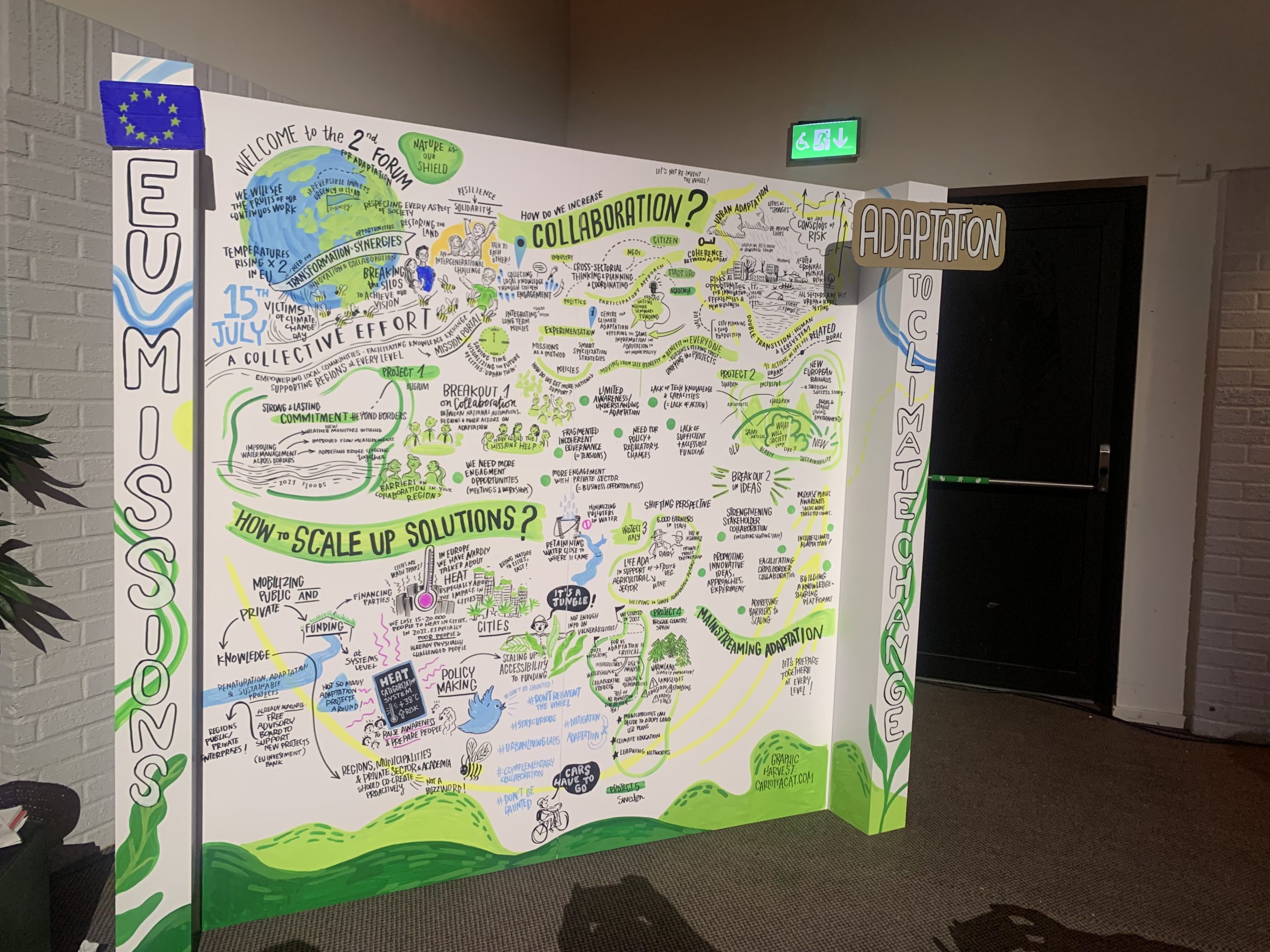
Having worked with her twice over the past few weeks at events where I was Master of Ceremonies, I saw how deeply she listens, and how rapidly she visualizes complex concepts.
She has developed her own language – bees represent a cross-pollination or cross- fertilization of ideas, a thermometer refers to rising heat in cities, while wellbeing is visualized not as a coin i.e. money but as a jewel.
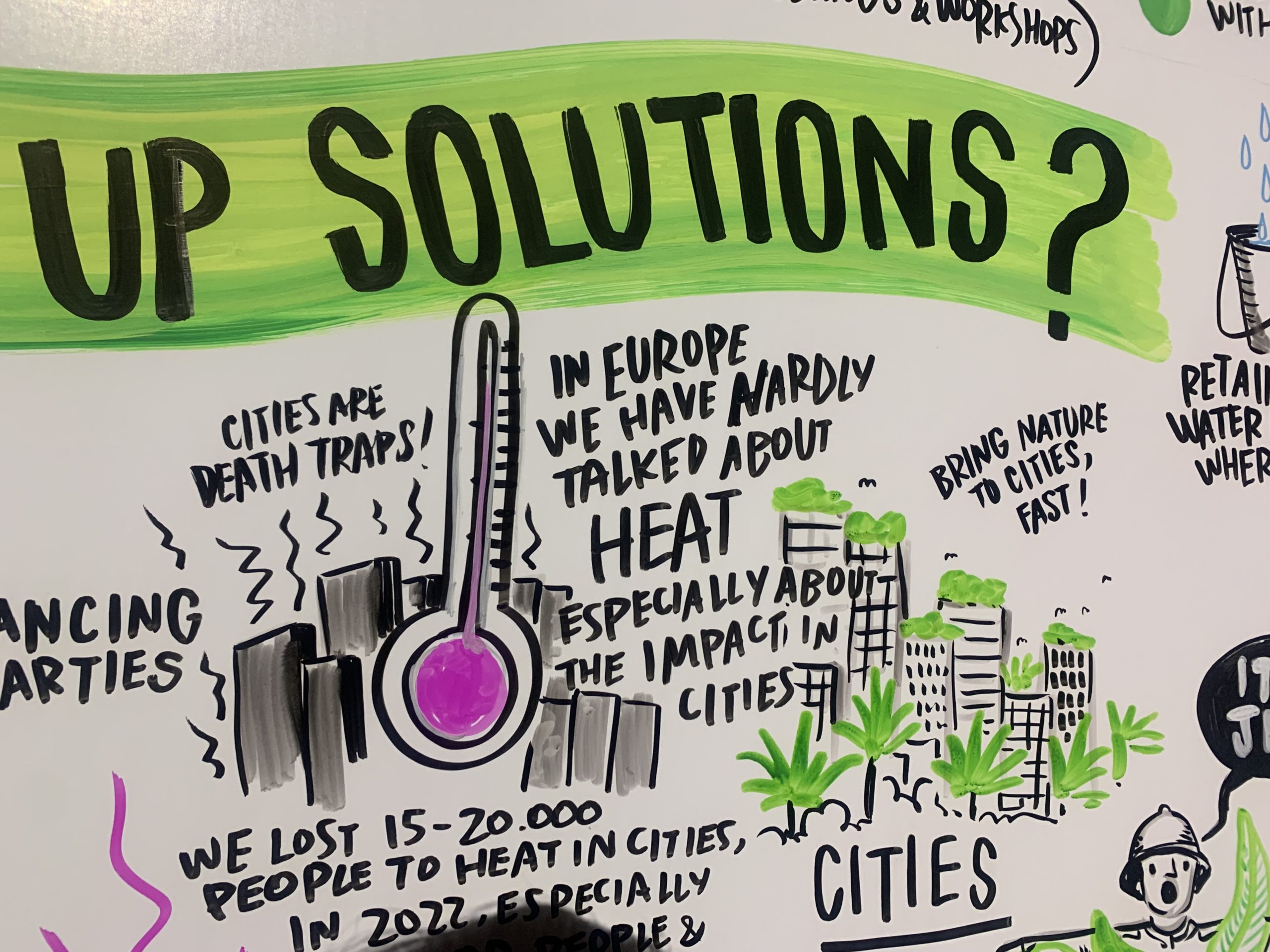
For the audience there are multiple advantages. It helps keep their minds focused on the content of the discussions. It helps to animate conversations, and provides them with an engaging visual summary of conference discussions to share with colleagues and on their social media channels.
A resource for organisers and the Master of Ceremonies
As a Master of Ceremonies or panel moderator, you are trying to bring clarity to the conversation in real-time. Carlotta goes one step further and turns that clarity into something visual – a mix of images and key messages.
It is, however, a team effort. I always introduce the graphic recordist to the audience at the start of an event and then, depending on time, I bring them in before coffee breaks and lunch and at the end of the day.
Sometimes, I may even ask the recordist to join me on stage to tell us what was important for them in the conversation. Each time, I am encouraging the audience to go and see what the recordist has done as this reinforces engagement.
At an event for Better Cotton last week where I was the Master of Ceremonies, we went one step further and encouraged the audience to write their insights or questions on post-its and tell us if anything was missing from the board or anything they wanted to draw.
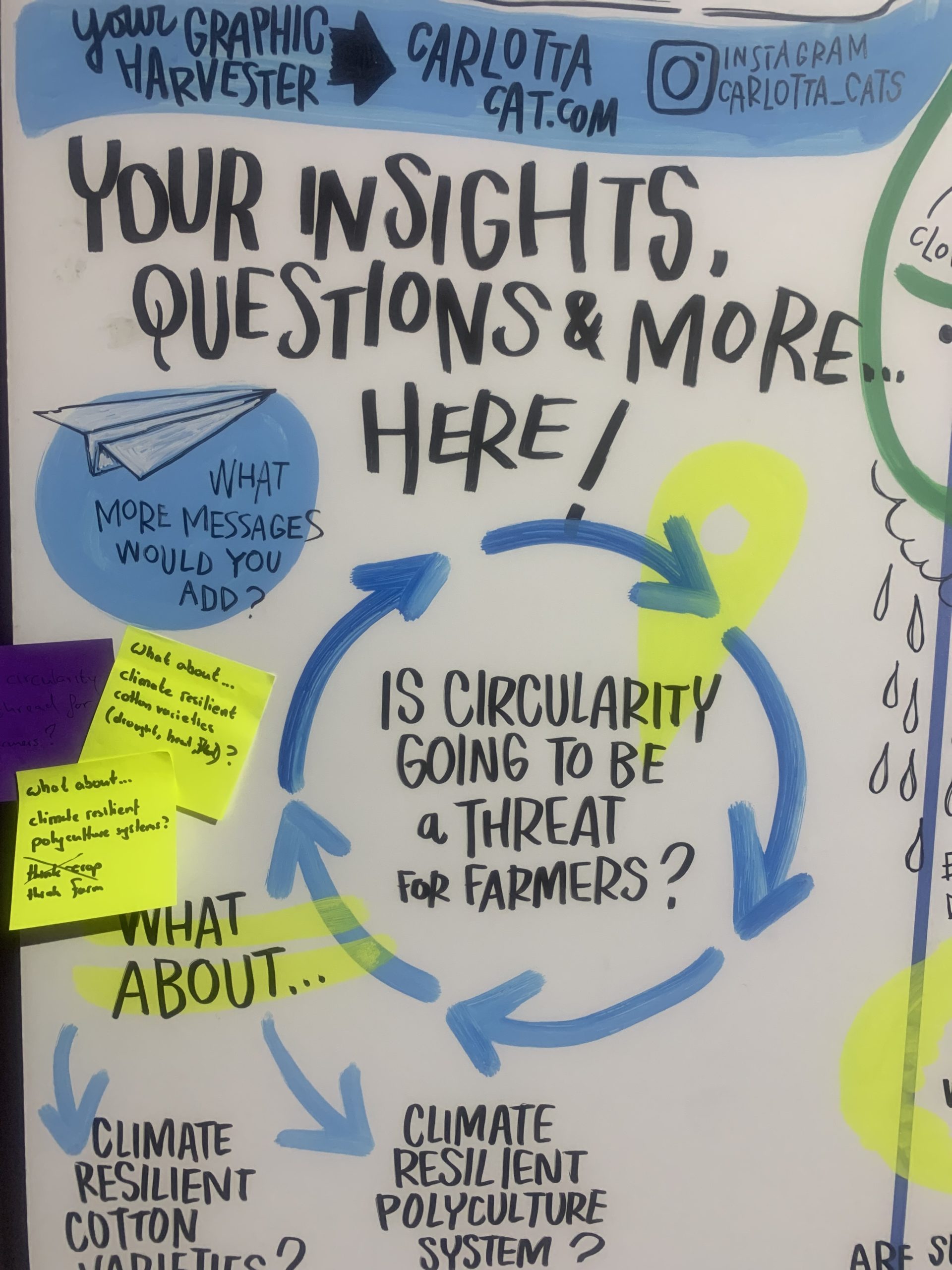
Organizers can often underestimate an audience’s need to be entertained and to participate in the conversation. Engaging a graphic recordist is a great way to ensure audience participation and make the event is more audience-centric and memorable. The images also are a great resource for post-conference reports and can be digitalized for use in PowerPoint presentations and webinars.
“I love my profession”, says Carlotta, “as it brings beauty and natural curves, a human touch to a business event.”
Claire Doole runs workshops on how to organise events and moderate panel discussions.
by Claire Doole | Jan 15, 2023 | Blog, Organising events
The head of an organization that last year ran more than 100 panel discussions asked me that question recently. By the way, if you think 100 is a lot, the organization had topped 150 panel discussions in 2020/21!
We all understand the quest for visibility, but sometimes less is more. The organization in question understood this when at COP 27 in Sharm El Sheikh last November it had to cancel a panel discussion – one of 15 it was organizing – due to a lack of audience.
Lack of audience
I was told by friends who attended COP 27 that there was marquee after marquee, side event after side event, but many of them were not full. One private company held a panel discussion at which only three people turned up.
This, I would argue, was an event that should have been cancelled, as it is not good for the organiser’s reputation, brings little benefit to the speakers, and is an uncomfortable experience for the audience.
Ironically, this is more likely to happen at big events like COP as there is more competition for attendees. This is having a knock-on impact on panelists in that they are being asked to speak at too many events, and there is not always enough of them to go around. Another international organization fielded requests from 80 side-event organizers for speakers – many of which they could not accept as they didn’t have that number of speakers available.
Lack of speakers
It can be challenging, particularly when organizing week-long events on a specific subject, to find enough speakers as there are sometimes only so many specialists. Organizers then turn to their B and C lists, which means speakers who are not so well-informed and are limited to the points they can or want to talk about.
In the past, speakers have grabbed the opportunity to be on a panel, whether for visibility or vanity, but organisers are reporting a new trend – the great panelist pullout. Panelists are either pulling out – often at the last minute – due to other commitments, suffer from panelist fatigue or because they see the low audience figures registered.
Countering the “cancel culture”
In the competitive world of events, organizers have to design and deliver an event that draws in audiences. Rather than limiting their thinking to speakers or subject, they need, for strategic reasons; to be more audience-centric – what is in it for the audience.
This means designing an event that first considers who are potential audience members and will the subject or theme capture their interest, either through possibly delivering best practices, offering new insights or helping them understand better the issues at stake.
After thinking first about how you will inspire or instruct the audience on topical issues, the next critical step is the casting – speaker selection. What are the criteria for choosing an effective speaker?
My question is always, what does a selected speaker bring to the discussion? Are they good communicators? How will the panelists interact with one another? This means that organisers need ideally to start the process of speaker selection a month to six weeks before the event, rather than leave it to the last moment.
Once you have your speakers, you need to explain to them why they are being invited and the questions they will be asked.
Similarly, organizers should not bring in the moderator in the final stages, but use their expertise in establishing the editorial flow for an engaging discussion even before contacting potential speakers. Many professional moderators are former or current broadcast journalists and know not only how to generate but also design a discussion that is productive and insightful for the audience.
I have reviewed these steps in more depth in previous blogs, but are worth recalling as we look at the weak links in panel organization.
In conclusion and to answer my friend’s question, you will be less likely to be put in the difficult situation of cancelling a panel discussion if it is well thought out, with the right speakers on the right subject at the right time.
Let’s hope in 2023 organizers don’t even have to consider cancelling a panel as they have realized the importance of quality over quantity!
Other blogs to read on organising events:
https://www.doolecommunications.com/successful-virtual-events-are-good-television/
https://www.doolecommunications.com/professionally-producing-virtual-events/
https://www.doolecommunications.com/has-there-been-an-event-reset-since-covid/

by Claire Doole | May 30, 2021 | Blog, Moderating
Have you seen the play, “Six Characters in search of an Author” by the Italian dramatist, Luigi Pirandello? Actors rehearsing for a play are interrupted by six unfinished characters in search of an author to finalise their story. It was first performed in 1921 and is part of the absurdist genre – breaking down the barriers between fantasy and reality.
Unfortunately, a century later, it is the absurd reality that many moderators can find themselves in when confronted with a cast of speakers selected by the organisers of an event. We struggle to work out why they have been chosen, and what they bring to the subject under discussion. We are then left to build connections between the speakers to create a narrative flow that makes sense to the audience.
Believe me, this can take hours of head scratching and sometimes the connections are just not there, particularly if an organiser has selected someone for non-editorial reasons such as an important donor, someone they want to do business or engage with in the future or because we must have a representative from all five corners of the globe.
Start with the what and not the who
Organisers often tell me they want a BBC-style discussion. If that is the case, they need to follow the principles of BBC news and current affairs programmes. You start with identifying the news of the moment – for event organizers – this translates as what is top of mind and relevant for the audience.
A lot of events today are focusing on building back better after the pandemic, asking if the world can be more sustainable. The BBC would take an opposing view structure bringing someone from the government to explain how they set new environmental targets to achieve net-zero emissions, and then an environmental activist who says the targets are inadequate. The BBC might also put into the mix an academic who can give context.
Unfortunately, organisers rarely want to have opposing views in a discussion – although this is often what is most interesting to an audience. They often prefer to have different perspectives on a subject. This is also possible but it takes more careful thought.
You need to come up with a title for the panel which ideally includes a question. For example, tea producers under threat – how to ensure production is environmentally, economically and socially sustainable? You could then invite a speaker from India and from Kenya to talk about the threats and possible solutions, before bringing in a speaker from a tea consuming nation, such as the UK, and a speaker from the FAO to discuss possible actions at local, regional and international level.
Be selective in choosing your panel speakers
If you want a real exchange of views, you need to select speakers who can not only speak about their area but pick up on points raised by other speakers or the moderator, and don’t have more than four speakers. All too often, panel discussions are in name only as they become interviews with each speaker and there is little exchange between the speakers.
One more point, do not accept the first speaker you contact. At the BBC programme producers hit the phones finding the right people for the subject and dismissing anyone who does not have strong views, new insights or who is not a confident speaker.
And they never accept people who all say the same thing. Imagine if Pirandello’s six characters in search of an author were all the same – that would have been mind numbing for the audience who would no doubt have voted with their feet and the play would not have endured as a hit show over the past century.

by Claire Doole | Dec 7, 2019 | Blog
In presentation training we refer to STAR moments – something that the audience will always remember. Normally, this is something that is unusual or surprising such as Bill Gates making jokes and opening a jar of mosquitos to infect the audience at his TED talk on the need for more investment in combating malaria.
Unfortunately, STAR moments in panel discussions are far and few between. You may agree with the Guardian writer that most panels are pointless.
Panels take time and skill to organise if they are to be productive, informative and engaging for the audience.
I would therefore like to give my gold star for the best panel discussion of 2019 to the Women’s International League for Peace and Freedom.
During Geneva Peace Week they organised a panel on framing peace from a feminist perspective in which peace advocates from Nigeria, South Korea and Lebanon shared their stories of alternative paths to peace.
WILPF_Geneva Peace Week_Flyer_Web
Why does WILPF win the gold STAR?
WILPF had all the ingredients for a compelling panel discussion – editorial and creative flair combined with a dash of strategic thinking. Below is their recipe for success:
Editorial strategy
1. The event linked to one of the overarching themes of Geneva Peace Week – a global perspective on peace building.
2. It had clear objectives:
• To explain what a feminist peace looks like
• To foster a discussion on alternative paths to peace
• To showcase the work of women advocating and working towards ending conflict
• To redefine security from a feminist perspective.
3. It was designed with the audience in mind – informed, diverse and interested in learning something new and different about peace building.
4. The selection of male and female speakers, from Lebanon, Nigeria and South Korea, and the stories they told perfectly matched the objectives and audience.
Creative flair

The Secretary General of WILPF, Madeline Rees wanted the event not to be “the usual panel discussion” but to go beyond the usual thinking about peace and bring to the surface different analysis, stories, strategies and solutions. This meant it had to be done differently and creatively.
1.The communication team was involved from the start – bringing not only an editorial but design flair.
2.The event was set in “WILPF’s Peace Lounge where the speakers were invited as guests to sit and share their stories with the invited audience.
3.The team created a space where lights and voices helped the participants to think differently and listen deeply. The event started in darkness with the audience shown to their seats by flashlight. For the first 5 minutes they listened to an audio recording – scripted by WILPF -between an actress and producer about how women tried and failed to get an inclusive and just peace after WW1.
4.The moderator made the link with women’s struggle today and as she introduced each speaker they emerged from the darkness and switched on their light.
5.In this intimate atmosphere, the speakers told stories about their commitment to justice, desire to end patriarchy and belief in a feminist peace. (In my next blog I shall review their storytelling best practice).

Preparation and rehearsal
The team organised technical rehearsals checking the set, the props, the lights and sound as if it were a theatre performance.
On the day before the speakers went through a dress rehearsal – practising their stories, timing them and working out the choreography of arriving on stage and activating the lights. As a result the “performance” was slick and professional.
Audience response

As the audience came in and sat down, I heard a few mutterings that the darkness and comfy seats could be an opportunity to take a nap. Far from it! The audience was engaged, prompted by the speaker’s stories to ask personal questions such as, “Anthony how did you become the man you are today?” and “Can I take you home as an example to my teenage son?”
The organisers had to turn away dozens of people. For those lucky enough to get seats, I heard only positive comments such as ” the best event all week” and “that was different and compelling”.
Disclaimer: I helped with the audio script, voiced over one of the roles and rehearsed the speakers, but the concept was all WILPF’s!
by Claire Doole | Feb 25, 2019 | Blog
How many of you attended this year’s gathering of the global elites at the World Economic Forum? If you were there, did you sit through any of the panel discussions? With the good and the great vying to be in the audience and on the podium, Davos panels are a hot, if pricey, event.
But how good are these discussions? Are they engaging, informative and thought-provoking?
Many a client has contacted me as a moderator saying they want a Davos-style panel discussion. In the conference/event industry, these panels with their star-studded line-up are obviously seen as the gold standard.
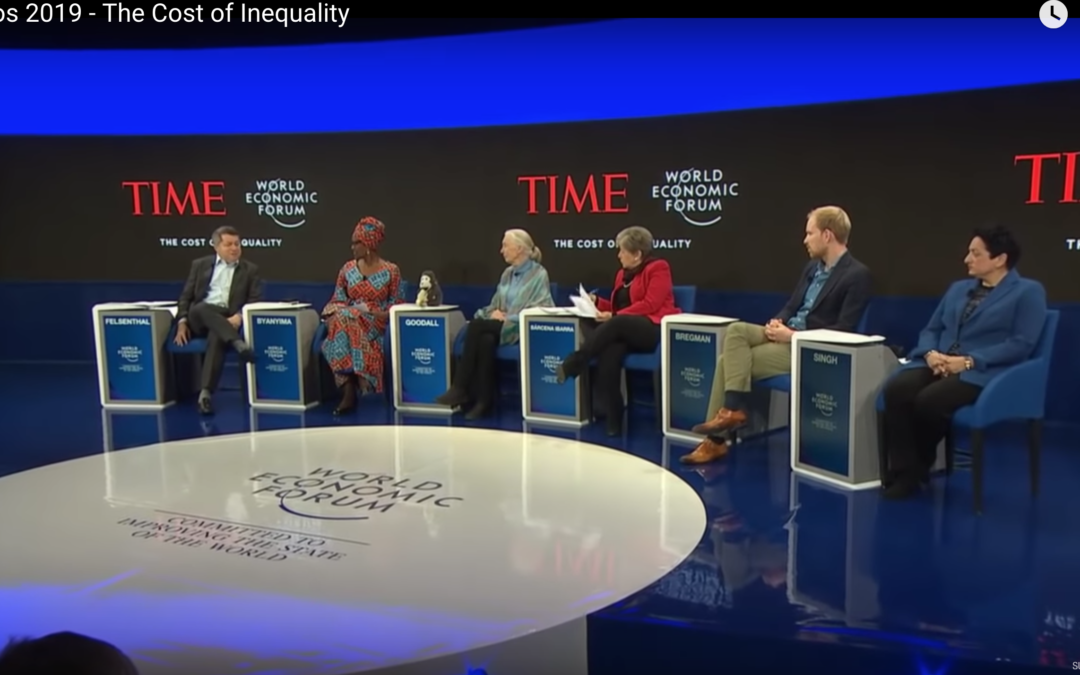
So, I decided to test this hypothesis and watch a panel in which Rutger Bregman, a Dutch historian, made headlines with his remarks about why no one at Davos was talking about the super rich avoiding paying taxes.
I watched the 1-hour session and was, to be frank, disappointed. Despite the expert and articulate speakers, there was no lively discussion. Although the title – the cost of inequality – was catchy, it was unclear the specific issues the panel was trying to address.
Instead, you got the tired format of each speaker giving opening remarks of 3 to 5 minutes followed by the moderator asking the panel in the exact same order a series a questions. The moderator failed to generate a discussion even when Bregman made his provocative comments on tax avoidance.
Admittedly, it is not easy with 5 speakers (3 to 4 is optimal) whose reason for being on the panel is not clear. Jane Goodall is an amazing primatologist, but is she really the right person to discuss the cost of inequality?
Fast-forward to 44.05, and you will hear one of the few members of the audience who got to ask a question, express surprise at the way the panel was created and remarking that it was extremely one-sided.
Tarnished gold
For me this panel did not meet the gold standard despite the excellent contributions of the Dutch historian and the executive director of Oxfam International.
All panels at Davos have star line-ups, but what they lack is a variety of formats and in many cases excellent moderators.
An exception this year was the panel on mental health matters with Prince William, Duke of Cambridge, and the Prime Minister of New Zealand, Jacinda Ardern, which was excellently moderated by a CNBC journalist.
Good TV journalists who know how to keep a conversation flowing and to time can make a big difference and breathe life into the most staid and familiar formats.
However overall, it would seem I am not alone in my disappointment at the standard of panels at Davos..
The Guardian concluded at the end of the 4-day talking shop that “Davos had lost its mojo” and that “the format – panel of experts – discussing the world’s problems looks tired”.
It may well be that Davos needs to be revamped as a forum – I have only ever attended as a journalist scurrying from one interviewee to the next.
However, the organisers armed with a dose of creativity could easily breathe new life into the panel format
Interactive and creative panel formats that work
I have always been impressed by the variety of formats used by the Women’s Forum for Economy and Society – which like the World Economic Forum has a main conference as well as regional conferences. One year they asked me to moderate three panels – all with different formats.
Panel 1 – Why are refugees only bad news? (A question in the title helps to focus the discussion). This was the classic Q and A format – with the moderator asking questions to 3 panellists and bringing in the audience.
Panel 2 – Why I am a feminist. The moderator interviewed the male CEO of Coca Cola, a self-declared feminist. Two female CEOs then joined the moderator on stage and started to ask him questions.
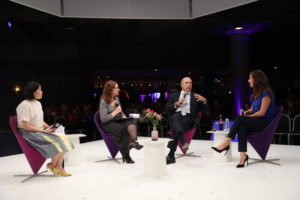
Panel 3 – Advancing women’s economic empowerment. The moderator launched a discussion with 2 speakers – then French presidential candidate, Emmanuel Macron, and the Canadian Minister for the Status of Women, Patty Hajdu. She then invited a third speaker – Arancha Gonzalez, Executive Director of the International Trade Centre – to join and ask any questions she had of the first two speakers.
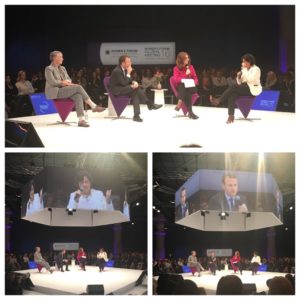
Seating the audience in the round – the so-called fishbowl format – is excellent for interactivity. Another client added another twist by leaving an empty chair on the stage for members of the audience who were invited to ask questions to each speaker after the curated Q and A with the moderator.
So WEF, with your star speakers, revamped creative panel formats and dynamic moderators no doubt your 2020 sessions will be pure gold?