by Claire Doole | Mar 4, 2025 | Blog, Organising events
“Organising an event can be a lot of work for little return” is increasingly the refrain I hear from communication and marketing teams.
They take up a lot of time and resources to prepare and publicise but fail to attract commensurate audiences.
For some, there are just too many side events in competition with each other for audiences and even for speakers. This was certainly the case at the World Economic Forum in Davos this year, and at the AI summit in Paris – where I am told some events attracted as few as 15 attendees.
In Europe budgets are tight, and cuts in US funding are making international and non-governmental organisations reassess their priorities.
Some events previously considered a nice to have but not essential may now be shelved. Others, such as annual congresses, assemblies or UN World Days marking the goals of the organisation, may have to statutorily go ahead.
So how do you get more bang for your buck in these economically challenging times?
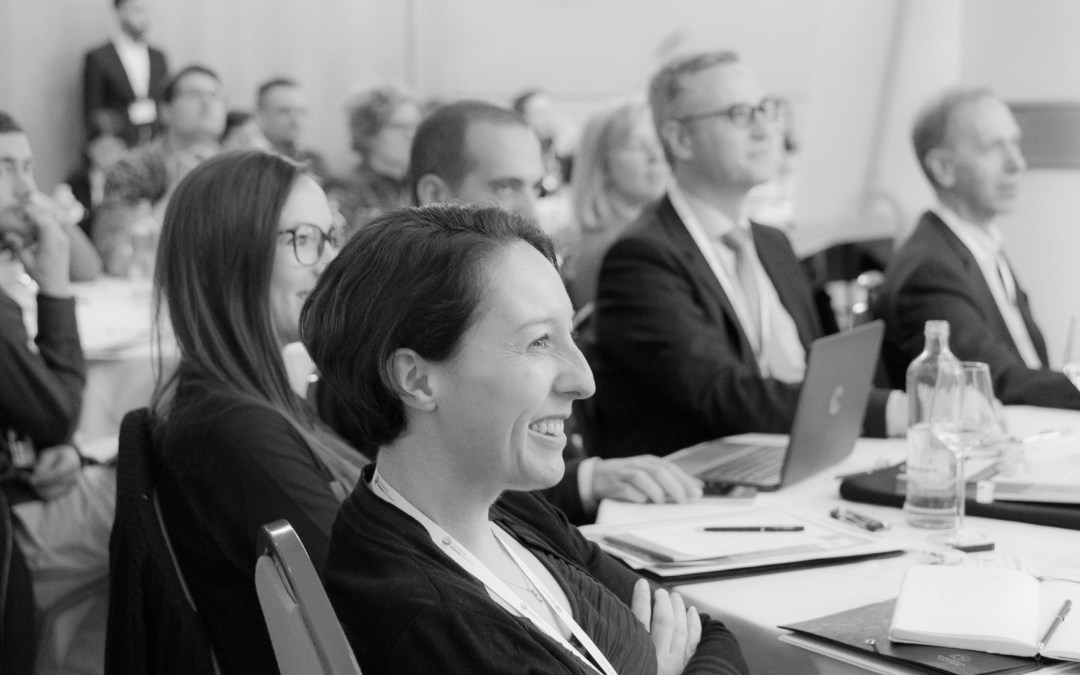
This month I was asked to give a talk in London to members of the Global Communications Development Network about the secret of engaging events.
Below are some observations/pointers from the roundtable hosted at the European Bank of Reconstruction and Development.
• Think like a TV or radio producer when selecting your panel topic—make it timely and audience-focused. Identify key questions first, then reach out to potential speakers to assess their fit. Frame it as an initial inquiry, emphasizing that the final lineup will ensure diverse perspectives, geographies, and genders.
• Select high quality speakers well in advance. If you leave it to a few weeks beforehand you tend to get panels built around what people know about rather than what the audience wants them to talk about.
• Cast the panel to ensure different opinions and views. Many of the organizations I moderate for tell me that they want a lively “BBC style debate” but invite only people who say the same thing. The moderator at this point has no option but to play devil’s advocate.
• Have a few in-depth interviews – the so-called fireside chat – with a key speaker can be far more productive than organising a panel that as mentioned above requires a lot of editorial thought and advance planning.
• Choose a moderator who rigorously prepares. Insist that all moderators whether in-house or external hold briefing calls with the speakers.
• Entertain your audience as well as inform and educate them. Make sure your programme is varied and appeals to as many senses as possible – sight, hearing, smell, taste and touch.
• Pick a date that doesn’t conflict with other major events in the calendar. It is unwise for example to hold an event linked to climate change at the same time as the annual Conference of the Parties (COP) to the Climate Change Convention as audiences and relevant speakers may not be available.
In these economically challenging times, many organisations are not holding events themselves, but joining forces with others – as a way of keeping costs down and also attracting a potentially bigger audience!
by Claire Doole | Jan 15, 2023 | Blog, Organising events
The head of an organization that last year ran more than 100 panel discussions asked me that question recently. By the way, if you think 100 is a lot, the organization had topped 150 panel discussions in 2020/21!
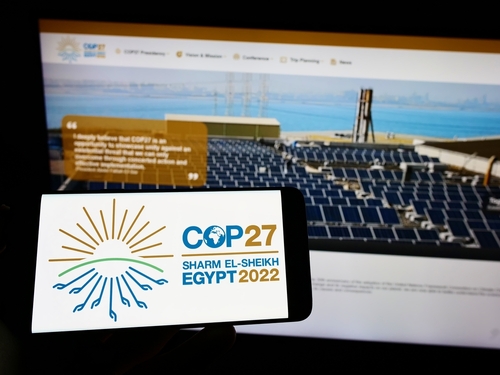
We all understand the quest for visibility, but sometimes less is more. The organization in question understood this when at COP 27 in Sharm El Sheikh last November it had to cancel a panel discussion – one of 15 it was organizing – due to a lack of audience.
Lack of audience
I was told by friends who attended COP 27 that there was marquee after marquee, side event after side event, but many of them were not full. One private company held a panel discussion at which only three people turned up.
This, I would argue, was an event that should have been cancelled, as it is not good for the organiser’s reputation, brings little benefit to the speakers, and is an uncomfortable experience for the audience.
Ironically, this is more likely to happen at big events like COP as there is more competition for attendees. This is having a knock-on impact on panelists in that they are being asked to speak at too many events, and there is not always enough of them to go around. Another international organization fielded requests from 80 side-event organizers for speakers – many of which they could not accept as they didn’t have that number of speakers available.
Lack of speakers
It can be challenging, particularly when organizing week-long events on a specific subject, to find enough speakers as there are sometimes only so many specialists. Organizers then turn to their B and C lists, which means speakers who are not so well-informed and are limited to the points they can or want to talk about.
In the past, speakers have grabbed the opportunity to be on a panel, whether for visibility or vanity, but organisers are reporting a new trend – the great panelist pullout. Panelists are either pulling out – often at the last minute – due to other commitments, suffer from panelist fatigue or because they see the low audience figures registered.
Countering the “cancel culture”
In the competitive world of events, organizers have to design and deliver an event that draws in audiences. Rather than limiting their thinking to speakers or subject, they need, for strategic reasons; to be more audience-centric – what is in it for the audience.
This means designing an event that first considers who are potential audience members and will the subject or theme capture their interest, either through possibly delivering best practices, offering new insights or helping them understand better the issues at stake.
After thinking first about how you will inspire or instruct the audience on topical issues, the next critical step is the casting – speaker selection. What are the criteria for choosing an effective speaker?
My question is always, what does a selected speaker bring to the discussion? Are they good communicators? How will the panelists interact with one another? This means that organisers need ideally to start the process of speaker selection a month to six weeks before the event, rather than leave it to the last moment.
Once you have your speakers, you need to explain to them why they are being invited and the questions they will be asked.
Similarly, organizers should not bring in the moderator in the final stages, but use their expertise in establishing the editorial flow for an engaging discussion even before contacting potential speakers. Many professional moderators are former or current broadcast journalists and know not only how to generate but also design a discussion that is productive and insightful for the audience.
I have reviewed these steps in more depth in previous blogs, but are worth recalling as we look at the weak links in panel organization.
In conclusion and to answer my friend’s question, you will be less likely to be put in the difficult situation of cancelling a panel discussion if it is well thought out, with the right speakers on the right subject at the right time.
Let’s hope in 2023 organizers don’t even have to consider cancelling a panel as they have realized the importance of quality over quantity!
Other blogs to read on organising events:
https://www.doolecommunications.com/successful-virtual-events-are-good-television/
https://www.doolecommunications.com/professionally-producing-virtual-events/
https://www.doolecommunications.com/has-there-been-an-event-reset-since-covid/