Storytelling for Inspiring Events

Storytelling for Inspiring Events

From the time humans gathered around a fire, our minds have been drawn to stories. It’s instinct — the way our brains lean forward when a tale begins, eager to connect, to feel, and to imagine what comes next. Stories don’t just entertain us. They move us and inspire us.

I am always struck by it – rooms filled with overcomplicated PowerPoint slides and speakers piling on facts like bricks, rather than telling a good story whose emotional pull, if well told, we will always remember.

Below are three examples of good storytelling during an event that I hope will inspire you to tell more stories.

1) Stories on panels: At Geneva Peace Week, I helped the Women’s International League for Peace and Freedom design a panel where the speakers were asked to share their stories with the audience. The team created a space for the audience to think differently and listen deeply. People were shown to their seats by torchlight. They listened in darkness to an audio recording we created to mark an event in history, and then the moderator went on stage.

She turned on the light next to her and asked each speaker one by one to
turn on their side light and tell a 3-minute story before she moderated a
discussion. It was a STAR panel (something they will always remember).

2) Stories for the concluding panel: As a moderator, I know it can be challenging to keep the attention of the audience right to the end. A woman whom I have been training to moderate used storytelling to great effect at a recent international environmental conference. She told a story in her introduction and asked the audience to tell a story to their neighbour about something that had given them hope during the event. She then asked the panellists to do the same.

The story she told was made famous by the environmental activist, Wangari Maathai – Kenyan environmental activist and the first African woman to receive the Nobel Peace Prize. Wangari told the story of the hummingbird, which, in the face of a raging forest fire, did not despair but took action by carrying drops of water in its beak to put out the fire. She believed that everyone could make a difference, no matter how small their actions seemed. You can watch it here.

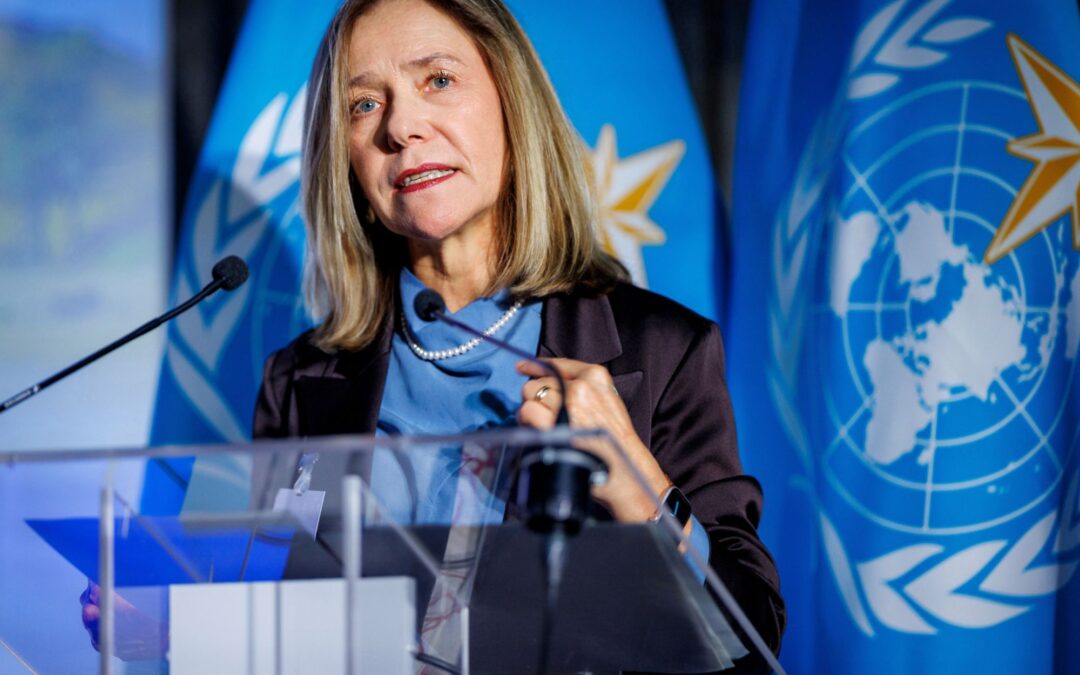
3) Stories in closing remarks: Wrapping up an event can be tricky — trying to distil hours of discussion into a few meaningful closing remarks. At an event I moderated last week, the Secretary General of the World Meteorological Organization, Celeste Saulo, chose a different path. Instead of listing key points, she told a story — one that conveyed why the world needs the WMO and resonated far more deeply with the investors in the room.

She told the story of Melissa, the category 5 tropical storm that hit Jamaica. “Melissa will break many records”, she said, “But the loss of life will be minimized thanks to international collaboration built on shared data and trusted systems.” You can see the full speech here – a great example of how to use stories to inspire and motivate.
(link https://wmo.int/content/closing-remarks-investors-forum)

A sought-after conference moderator, Claire helps clients design impactful events, trains in how to moderate and also in how to use stories to get your message across.

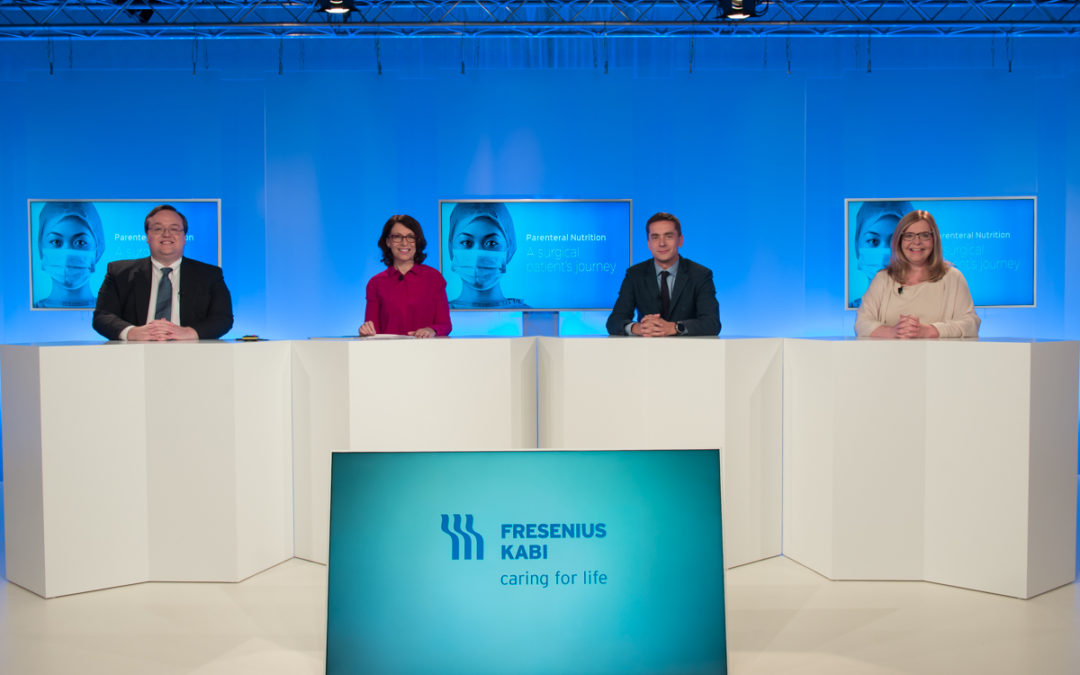
Photo courtesy of Marc Bader.
The Forgotten Panel Participant – The Audience

The Forgotten Panel Participant – The Audience

Many people I know – both panelists and audience members – are wondering what is the point of panel discussions.

This is what I am told by the senior managers, leaders and experts I have been training in various communication skills.

It seems they are often too promotional, disorganised, lack focus and fail to deliver any new insights or engage the audience. In fact the audience takeaway seems to be at the bottom of the organisers priority list for a successful panel discussion

And ignoring the audience is having consequences as organisers tell me that fewer people are showing up for virtual, hybrid or in-person panels. It would appear that post pandemic we are all suffering from a case of “zoomitis” and thinking twice before we tune in or turn up to an event.

Putting the audience first

Organisers need to clearly articulate why they are organising the panel and the outcomes they want to achieve, including answering the question why the audience should attend?

Here are some questions that ensure a more audience-centric focus:

• Why is this topic important right now?
• What are the key challenges the audience is facing on this topic right now?
• What does the audience need to know?
• What does the audience want to know?
• What is the benefit to them? Why should they care?

By the way, these are the same questions you should ask when preparing a presentation. Presenting is all about the audience – and so is organising a panel discussion!

It is only once they have thought about their purpose and the audience that they should invite the speakers. Big names can be a draw, but they, like all panelists must be ready to address the issues raised in the panel and not see it as an opportunity to promote their organisation.

Engaging the audience

Most direct audience engagement usually happens during the audience Q&A. Unfortunately, this sometimes doesn’t happen because the moderator runs out of time, often because there are too many speakers are on the panel.

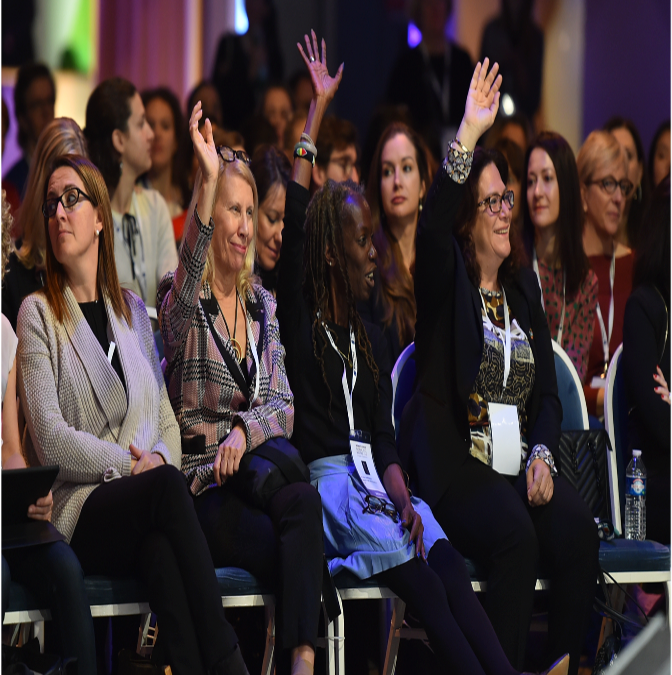
I feel that the Q&A is given short shrift, seen as an add-on rather as integral to the event. In my view, the audience should feel part of the discussion from the beginning to the end. The moderator, for example, can ask the audience’s view at the start of the panel with a raise of hands, or poll, as well as at certain moments during the discussion and can even ask for their opinion or response to a comment made by a speaker.

The moderator’s role is not only to ask the questions the audience wants asked – similar to that of a good journalist, but also to keep them in mind throughout the discussion.

If organisers and moderators take a more audience-centric approach to panel discussions, I am convinced that they will not only get better outcomes, but that the audience will turn up in droves for other events, they organise.

Moderating Panel Discussions in a “Pandemic”

Moderating Panel Discussions in a “Pandemic”

The World Health Organisation has not yet declared the new coronavirus to be a pandemic, but to some of us who earn our living from moderating at events or training international teams, we are already suffering the consequences.

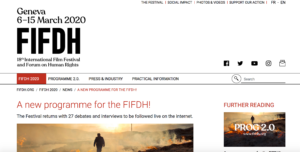
Last Friday the Swiss Federal Council announced a ban on all gatherings of more than 1000 people. It looked to be curtains for the International Film Festival and Forum on Human Rights scheduled for the 6th to the 15th March.

But yesterday the organisers announced their “programme 2.0” in which a smaller number of discussions and interviews would be transmitted live over the Internet allowing the public to ask questions of the speakers.


Proof indeed that webcasting is a potential solution for event organisers as they navigate the uncharted territory of travel bans and cancelled conferences and panel discussions.

Webcasting is just one option as I outline below based on my experience as a radio and video producer, presenter and panel moderator.

Audio or video

Audio, like radio, is much easier and less expensive than video.
You can create a sense of intimacy and connection with the listener if you have a moderator with a well-modulated voice and who is skilled at animating a discussion.

The speakers must also have good radio voices and have clear opinions and points to make.

With video, it is technically more complicated as you will need lights, camera and operators depending on the size of your budget. However, people remember things best when visually presented so video can be more powerful.

Pre-record or live

Live broadcasts get more viewers, as people love the sense that they are in real-time and capturing the moment.

However they come with the risk of technical glitches, challenging audiences and online trolls.

If you have a well-developed social media strategy and significant followers, then broadcasting on Facebook or YouTube live is a good option as it is technically not complicated and relatively inexpensive.

However, you have more control over a pre-recorded audio or video discussion and can also use the material in podcasts, online and on digital platforms to maximise audience engagement.

Whether live or pre-recorded, keep the panel discussion to no more than 30 minutes. Unlike traditional panel discussions, which can be from 45 minutes to 1 hour 15, those that are recorded and watched on line need to be shorter so you manage people’s short attention span.

Logistics and look and feel

Whether you are pre-recording or going live with audio or video, you need to think about the look and feel of the discussion. Do you want people to be seated on sofas like on Breakfast TV or in high backed chairs like at the World Economic Forum in Davos or will everyone be on high chairs news presenter style? It will all depend on the atmosphere you want to create.

Here are some other thoughts:

• Do seat the moderator and speakers so that everyone has eye contact. You don’t
want them to be seated in a line.
• Keep the number of participants to 4 including the moderator.
• Check the sound quality. Tie mikes are best for video and audio, as people often
don’t hold mikes correctly.
• Dress so that tie mikes can be clipped onto a shirt or blouse with no cable
showing.
• Make sure the room or studio is sound proof. If you are recording in an office
space, turn off the air conditioners as they hum.
• Provide make up or at least powder for video as this evens out the skin tone and
under studio lights guests won’t perspire.
• Select a moderator who is used to taking instructions from a director in their
earpiece if you are webcasting. The moderator will need to pass instructions on
to the speakers such as which camera to look into.
• Have an autocue for the moderator’s opening and closing remarks and for the
questions coming in from the public.

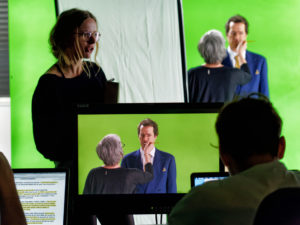
2020.02.25 – Studio Smart Cuts
L’équipe de 120 min en studio fond vert.
Photo : Philippe Krauer / Smart Cuts Video & Animation

Use professional production houses

Check out your local video and audio production houses and their studio facilities. They can advise you on what is technically possible in terms of lights, microphones, and cameras as well as how to manage speakers remotely and handle questions from the public.

In Geneva, I have worked with Actua films and La Souris Verte and just outside Lausanne there is Smart Cuts video and animation run by a former BBC colleague.

So event organisers, and moderators, don’t abandon hope in these uncertain times. Think creatively and you will be able to hold panel discussions albeit in a different format.