People often ask me who excels at talking to the media. My answer is Philippe Lazzarini, Commissioner General of UNRWA – the UN Palestinian Relief Agency that employs 13,000 people in the Gaza Strip, and runs schools and social services.
Lazzarini has one of the most challenging jobs in the world, made even more difficult since the tragic events of October 7th. Currently, he is banned by Israel from visiting Gaza, and his agency is not allowed to deliver much-needed food to the North of the strip where famine looms. Israel has also accused a dozen UNRWA staff of involvement in the Hamas attacks on Israel – allegations that remain unsubstantiated. 189 of his staff have so far lost their lives in the conflict.
Yet he remains cool, calm and collected when questioned by the media about those allegations, the effectiveness of the relief operations or the plight of the Palestinians.
I have analyzed some of the interviews he has done with major international broadcasters, Al Jazeera, Sky News and BBC, over the past six months, with a view to illustrating some of the techniques he uses that make him such an excellent interviewee.
1. Rebuts unfounded premises/charges – In this Hard Talk interview on the BBC in November last year, he held firm against Stephen Sackur’s renowned inquisitorial questioning. ‘
2. Avoids words that are loaded for you – In this interview with James Bayes from Al Jazeera in December, he avoids the trap of blaming the Israeli army for war crimes but reframes the question and makes the point about the need to respect international humanitarian law.
3. Keeps to his area of expertise
In this interview with Yalda Hakim of Sky News in March, he is asked why there is no political will for a ceasefire. He does not get dragged into answering on behalf of Israel or Hamas but voices his concern about food being used as a weapon of war.
4. Redirects questions to where he wants to go
James Bayes asks him if he is angry about the plight of the Palestinians, to which he replies that he is angry about the indifference of the international community and makes the broader point about a loss of humanity.
5. Talks about the impact on people
In this interview with Al Jazeera, he focuses not on UNRWA but on the people of Gaza, relating stories of their plight and what they told him when he was able to visit them.
6. Keeps on message throughout
Throughout all these interviews with BBC, Sky News and Al Jazeera, he takes control by staying on message and delivering it clearly and compellingly.
At the end of his interview on Hard Talk, he is asked whether the Israeli offensive could lead to the mass displacement of Palestinians from their homes – similar to the Nakba of 1948. Have a listen to his answer.
Unfortunately, his fears in that interview appear to be proving correct, with more than 1.9 million Gazans currently displaced, and the offensive on the city of Rafah underway.
In this type of sit-down interview done by star presenters, you have longer to get your message across than in a short news interview. However, all of the techniques mentioned above as well as the many more I share in my coaching and media training workshops are effective and can help you become a great media communicator – just like the head of UNRWA Philippe Lazzarini
In May last year I trained the UNRWA senior management team in how to effectively talk to the media.
If you would like to be coached or attend a media workshop online or in-person, contact me for a discovery call. As a former UN, IFRC and WWF International spokeswoman and BBC correspondent, I not only give you the authentic interview experience but also advise on how to get your message across.
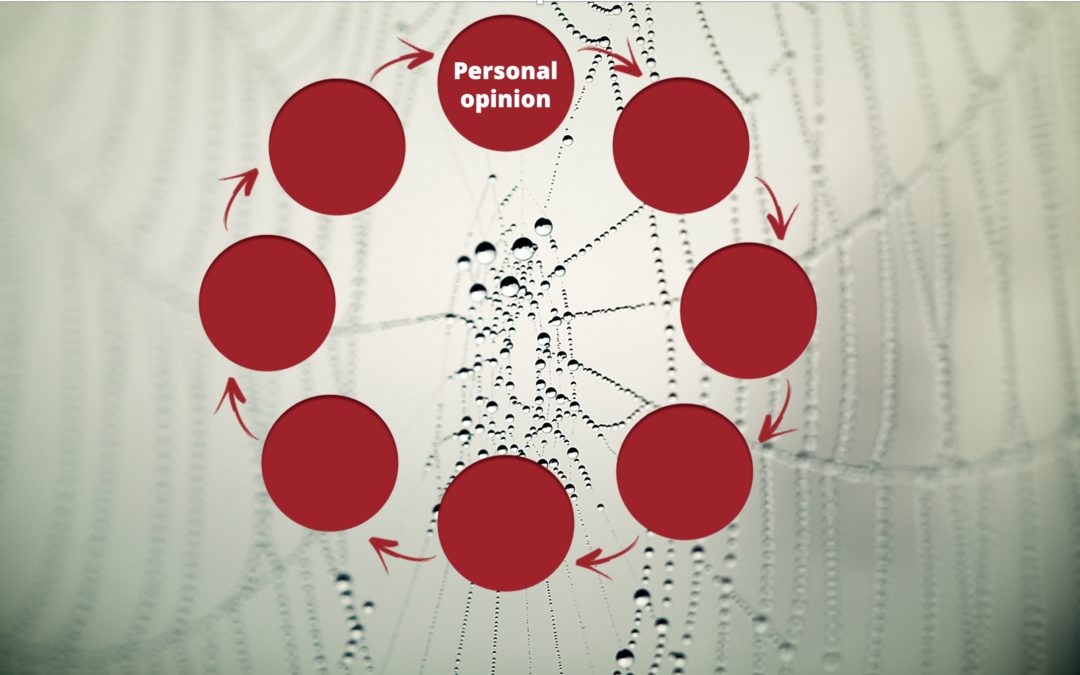
Journalists like to probe during an interview and often ask you a question about what you would personally do or what you think. Depending on how you answer, you can find yourself caught in a spider’s web that is difficult to escape.
In this blog, I will share an experience and give you some tips on how to answer this type of question.
As head of media at WWF International, I attended a press conference in London organised by WWF UK to launch a report on an oil spill off the coast of Spain. A journalist from the Guardian asked the speaker from WWF UK – would you eat the fish? He replied; I would not eat the fish. The speaker from WWF Spain and the report’s author replied that the fish was safe to eat.
This scenario is a public relations nightmare – two people from the same organisation contradicting each other during a press conference. I was not moderating but sitting in the audience observing, so powerless to act. Afterwards, I went up to the journalists to attempt some damage limitation. How will you spin your way out of that one? The BBC environment correspondent asked. I am not, I replied, but I suggest you talk further with the author of the report.
The problem was that the Spanish speaker had been great as a spokesperson when the oil spill hit the coast but struggled to convey the main points of the report in English. The journalist from the Guardian had become frustrated and asked the classic tricky question. The problem was the speaker from the UK had not thoroughly read the report and thought that if he added the word “personally”, his answer would be satisfactory.
Unfortunately, that is not the case.
The headline in the Guardian the next day was that the fish were not safe to eat, making the work of WWF Spain with the fishers even more challenging. It is safe to say that we all learnt lessons from that press conference!
If you speak as a representative of an organisation, your opinion has to be the same. Journalists often ask this question when they sense that your personal opinion may differ from the “party line”.
It is, in my view, fair game to ask policymakers, decision-makers and regulators, for example, during the pandemic, if they are vaccinated or would vaccinate their children.
Strangely, it can be more difficult to answer on behalf of a close relative. A few weeks ago, an investigation from the police watchdog criticised the London Metropolitan force for misogyny, racism, bullying and sexual harassment. Have a listen to this on BBC radio.
The presenter asks the spokesperson for the police watchdog if he would feel comfortable if any of his female relatives relied on the Met if they were vulnerable in any way. It is often a question that comes near the end of an interview, in this case it is at 05.52
You will note that he doesn’t answer directly but uses the question to drive home his message about the need to call out such behaviour when it occurs.
The personal question is a trap only if you let yourself fall into it. It can work in your favour and that of the journalist, providing them with good quotes and soundbites. And, if you proactively include a personal example or story in your answer, it can build credibility help to understand and bring your point to life. Just make sure, though, that the personal is always on your terms!
In everyday conversation, we often lead up to the point we want to make but when we are taking questions after a presentation, in a job or media interview then we want to do exactly the opposite!
Why is this? Because we want to be clear and concise and show with confidence we know the answer. And in a live broadcast interview, if the journalist suspects you are avoiding the question, they will interrupt and ask why you are not answering the question. So your reputation depends on getting to the point quickly.
Recently I watched some pre-recorded interviews done by CNN Money in Switzerland. As the Geneva Conventions turn 70, the programme asked whether this is a cause for celebration or concern? The reporter did 3 interviews with experts on whether the Conventions on respecting the rules of war are still relevant.
They illustrate 3 different ways of answering a question. Which one do you think is most effective?
Leading up to the answer
It takes the interviewee 45 seconds before she answers the question on whether the
Conventions are still relevant. And by the way, she doesn’t need to say they are not respected unless specifically asked as this opens her up to a potentially negative follow-up question.
In the second question on whether the Conventions should be broadened, she introduces too many ideas in a very long answer at nearly 2 minutes. If you go over 1 minute as a rule of thumb, you are normally not sticking to the point and in danger of rambling, makingit difficult for the journalist and, most importantly, the audience to follow you.
In the third and fourth questions she is much better because she answers the questions
directly on whether Geneva will remain a humanitarian epicenter.
Leading up to the answer is often the default position of academics, lawyers and scientists as they are trained to build their case – the why and how – before they give their conclusion i.e. their main point. The problem with this technique is it takes too long to get to the point with the risk that your audience is moving on to another channel.
Putting the what before the how and why
When talking to the media or even writing for the media – press releases also follow this principle – you need to make your point first and then give supporting evidence.
The interviewee here does exactly that in the CNN Money interview.
She follows the model I use in my media training – Point-Reason-Example- Point. (PREP)A textbook example!
The third interview is a mix of leading up to and answering directly the question.
What he does well though is make clear and simple statements such as “They (The Conventions) are not ideal, but they are the best we have. However, what they are not doing successfully is fighting terrorism.” As a result, he is eminently quotable!
PREP is key
Making your point first and not leading up to it takes preparation and practice. Before you do a media or job interview prepare 3 key messages you want to get across using the PREP formula.
When asked a question if it is favorable to you then answer it directly using the formula. You will impress the interviewer with your clarity of thought, make your point clearly and concisely and run no risk of getting interrupted!