by Claire Doole | Oct 25, 2021 | Blog
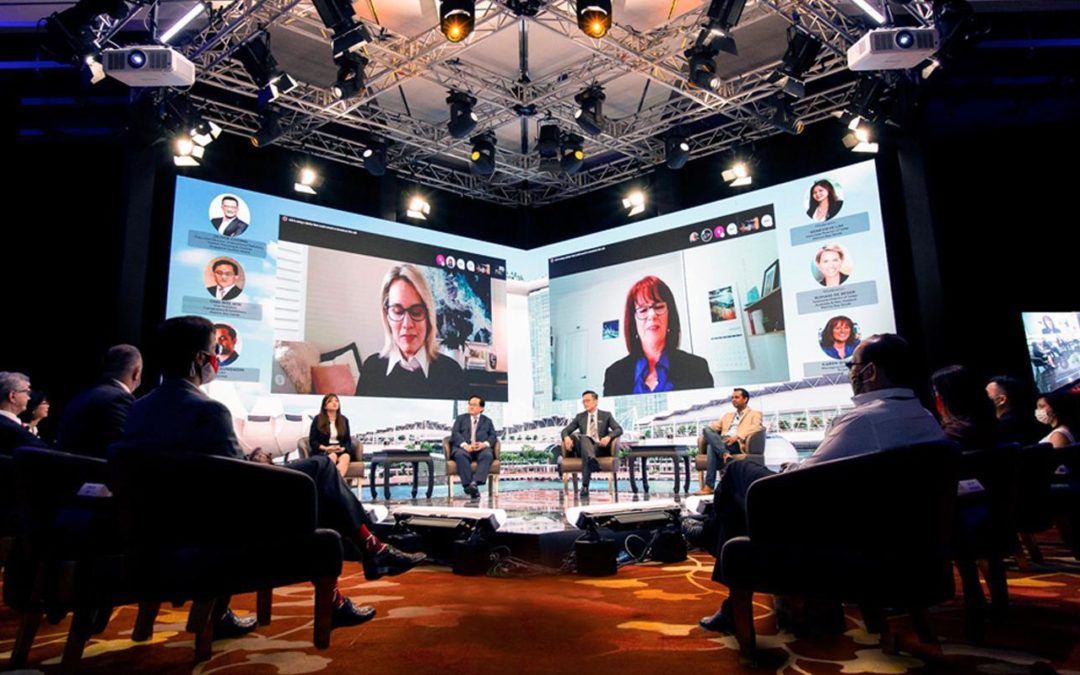
The pandemic is not over, but at least in Europe there is a return to something resembling normality (for the moment at least). At the virtual and hybrid conferences that I moderate, many speakers are talking about the small window of opportunity that exists to reset the world for the better of humanity.
But in my small world of moderating at events nothing much has changed – unfortunately!
I had hoped that some of the best practices from the virtual world – shorter event times, shorter presentations/speeches, greater variety of format and creativity – would become the new normal.
We know that we have to work harder to break through the screen of indifference when an event or meeting is virtual. The hybrid format – focusing on a virtual and in-person audience is challenging technically and editorially. I know some clients who have decided to abandon hybrid in favour of virtual or in-person.
However, editorially I am still seeing the same errors at some, not all, the events that I moderate. Here are some of them:
• Events are too top down. They are based on the organisers’ needs and not those of the audience. Many of the panels I moderate don’t address the issues or answer the questions that are top of mind for the audience.
• Agendas organised in silos. Breaking the silos – for example, ensuring scientists, diplomats and policymakers talk and listen to each other is a common aspiration among audiences. However, organizers fail to apply this logic to their event programme. Too often, they put people from the same sector, for example civil society, on the same panel so naturally they frequently all say the same thing. There is no genuine debate or discussion – just different perspectives on the same topic, but based on the work or the country where the panelist works.
• Panels are segregated. Mainstreaming is another big buzz word at these events yet all the speakers from one region are put together. Recently two great panelists from Nigeria and Cameroon complained to me that they, along with two other speakers from West Africa, had all found themselves on the same panel on inclusive growth. Can we not be mainstreamed into other panels with other sectors, they asked?
• Sectors are pigeonholed. Young people at one event that I moderated said, while they were grateful to be part of the opening ceremony, they felt as if this was a token gesture – a box ticking exercise from the organizers to show that they were taking young people seriously. Myself and the other moderator invited them back to the closing ceremony where we introduced them as a doctor and lawyer!
• Jargon is rife. I struggled for days at one event to understand some of the panel briefs given to me. I showed one of them to various attendees at the conference beforehand and no one understood it. My speakers all had different interpretations about what the focus of the discussion was – and it was written in the programme. My fellow moderator had the same problem with his briefs but assumed it was because English was not his mother tongue. They were he said a “Wortsalat” or “Scrabble” (the board game) as it translates into German!
• Manels are still with us. I had one panel with 9 men – enough to make the UN Gender Champions and EU Gender Watch, who monitor panels to ensure gender diversity, scream in their remote offices.
• Too many speakers are invited. One conference I worked at took the prize for most ambitious event; they had three keynote speakers followed by three presentations followed by four different panelists to be completed in 75 minutes. Bottom line on number of speakers is that if you have more than 4, you get a presentation of points rather than an exchange of ideas.
• Events are too long. 7 hours! I have a one day mostly virtual event with the moderator and a couple of speakers in the studio. It is supposed to last 7 hours. I wonder who will be left watching virtually by the end of that day?
I am an optimist by nature. I still hope that the window of opportunity is there for an event reset, but I fear that it is closing fast as people fail to learn the lessons of the pandemic and apply some of the good practice learned over the past 18 months.
Claire helps clients design their virtual, hybrid and in-person events and runs workshops on organising and moderating at events.
by Claire Doole | Jan 24, 2021 | Blog
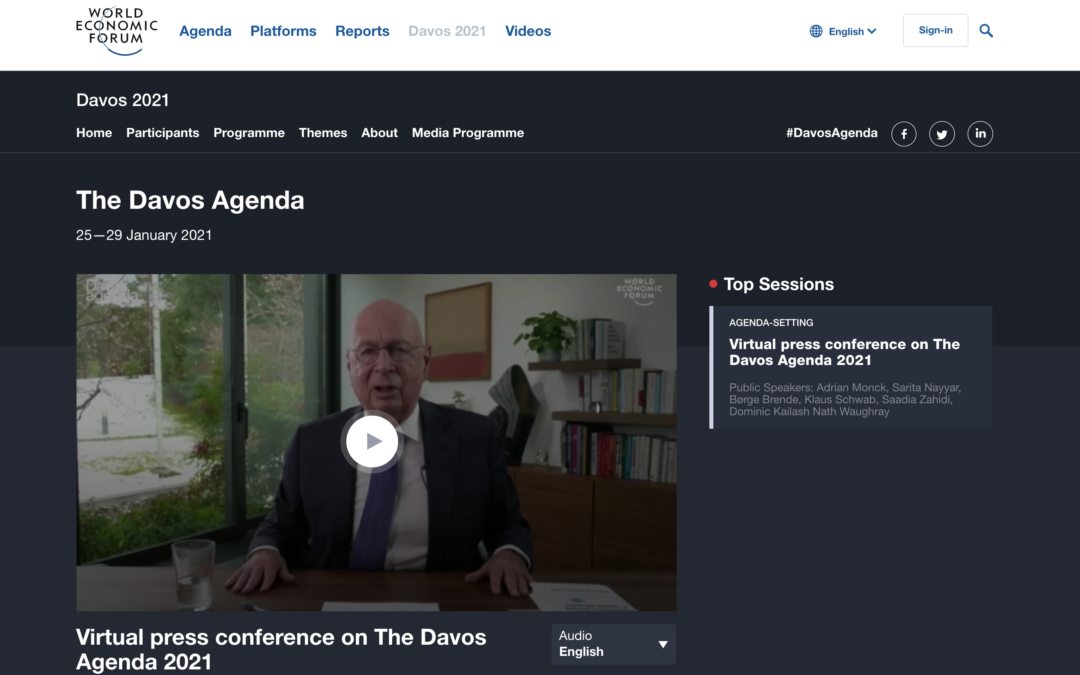
This Monday the powerful icons of business, finance and a spattering of civil society will not meet in the Swiss ski resort of Davos for the annual World Economic Forum’s flagship meeting. Instead, they will meet virtually for a meeting billed as the Davos Agenda which will focus on rebuilding trust and shape the principles, policies and partnerships needed for 2021.
I am hoping the virtual meeting will also showcase and shape best practice in terms of organising virtual events. Many companies and organisations have made the shift from physical to digital events – recognising that producing a successful event is like producing a TV programme. As I wrote in my September blog, they must be shorter, more varied, more creative, better moderated and rigorously rehearsed.
But since then, it has become even more obvious that organisers are going to have to up their game if they are to counter the increasing challenges of high attrition rates.
Let me share some anecdotal evidence. Organisers are not getting the numbers as “zoom fatigue” sets in and attendees zoom out. In some instances, there are just too many virtual events. One communications director from an international organisation told me they organised 67 webinars last year – sometimes up to three a week– and had to make sure staff took part to ensure strong numbers.
This year, faced with budget cuts, international organisations and NGOs are scrambling for relevance with donors, which means the pandemic of virtual events shows no sign of slowing. However, they systematically risk forgetting the well-known saying in communications that less is more.
In the corporate world there are also challenges. I hear that some C-suite members are reassessing their attendance at virtual events as the opportunities to network and influence are limited. CEOs go to Davos after all mainly for the deals they can do in the corridors or on the ski slopes!
Other executives have told me that their companies are weighing up the benefits of sending staff to trade fairs as they are not getting the leads, despite the networking opportunities offered on some platforms. They complain about the business model of having to pay extra for networking and that these meetings are just not the same as the chance encounter over coffee! Some companies are even reducing or pulling out from sponsoring virtual events this year due to disappointing attendance figures.
What will change in 2021
Despite the challenges of virtual events, everyone agrees however that they are here to stay. They still offer the 4 C’s of convenience, cost, convening power (greater diversity and reach of speakers and attendees) and climate change impact.
However, given the limitations of the virtual world, the next race is on to replicate as closely as possible the experience of attending a physical conference.
In 2021 we will see two major changes –a move to larger scale hybrid events and the creation of platforms designed to augment reality and provide an enhanced nearly physically presenter user experience for those who’ can’t be on site.
Hybrid events are likely to become the new normal
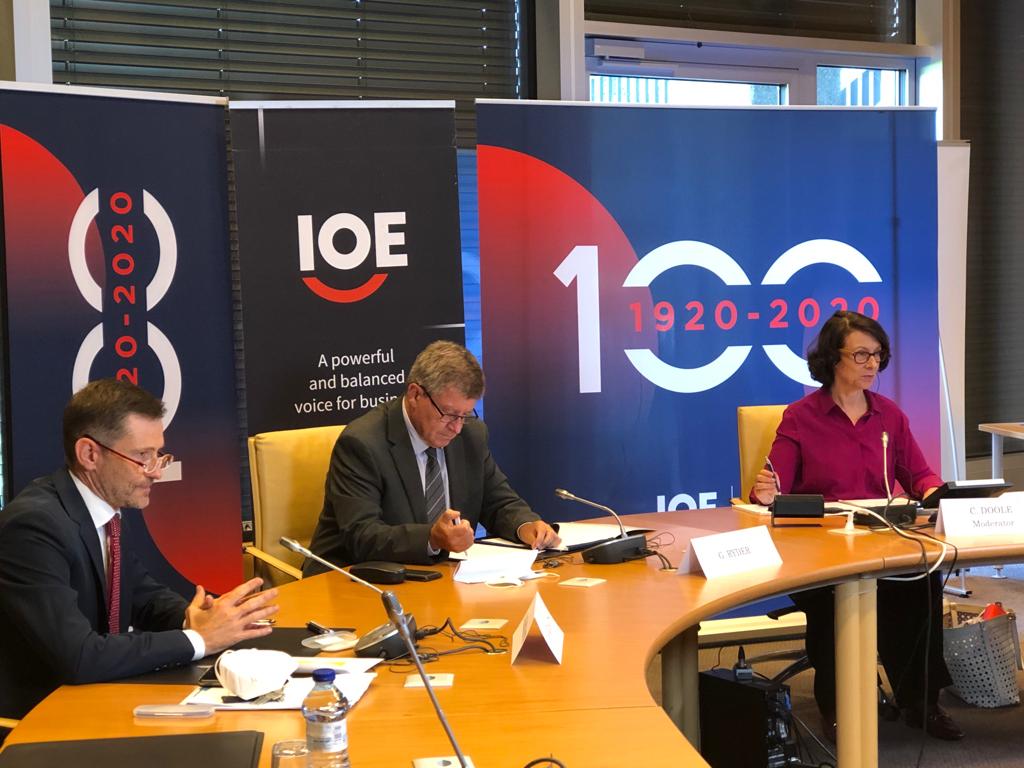
The reasons are obvious – hybrid events are more dynamic as they bring in the dimension of human contact, making discussing more interesting and emotional. Believe me, it is much easier to moderate a discussion when you can gauge body language and interject to drive the conversation forward. It also has the great advantage that even if speakers lose connectivity, you can keep the discussion flowing as you can turn to those with you in the studio!
Already, we are seeing on TV, presenters and guests appear in the studio as well as on screen, and some programmes and sports events now have a socially distanced live audience.
Next generation of platforms
Platforms are working hard to reduce any perceived inequality between those who are physically present and those joining virtually. Platforms like Lunchpool and Vsummits are for example developing networking features, allowing attendees to move from virtual table to virtual table and talk in small groups or one-on-one.
The challenge of hybrid events and using such platforms is cost, which might be prohibitive for those without deep pockets. The company that comes up with an inexpensive model for hybrid events that brings in new technologies from the gaming world and AI will be highly sought after – making such platforms as Zoom pro, MS Teams and Webex relics similar to the first iphone.
Virtual still has a place
Some organisations though will still opt for a fully virtual event for reasons of inclusivity, preferring the level playing field of speakers and audience all coming together virtually.
This week the Davos Agenda meeting should show us what is possible to achieve in the virtual world. I am looking forward though to finding out more about the hybrid event that the World Economic Forum is organising in Singapore in May as this could serve as a model for large scale hybrid events – the next step in our return to the new normal!
Claire moderates in the virtual world and can help you organise an event that attracts and retains your audience’s attention.