by Claire Doole | May 11, 2016 | Blog, Writing
Do semicolons terrorise you? Have you forgotten your primary school lessons on comma use? Do you feel guilty when others point out your punctuation errors? You are not alone. Grammar purists pummeled U.S. President Barack Obama’s 2009 Inaugural Address because of a minor grammatical error. If even Obama falls victim to the grammar police, what hope is there for those of us who do not have an army of speechwriters. How do you write even a simple email without being terrified of making a grammatical error. How do you overcome the grammar guilt and fear?
Complicating the issue is that in this internet age, the measure of a person is, in part, taken by assessing his or her knowledge of good grammar. One CEO wrote in the Harvard Business Review: “In blog posts, on Facebook statuses, in e-mails, and on company websites, your words are all you have. They are a projection of you in your physical absence. And, for better or worse, people judge you if you can’t tell the difference between their, there, and they’re.”
Our advice is to first relax, then get the basics right and do your best on the rest. The basics are what we call the six Cs of grammar and punctuation – commas, colons, capitalization and clauses together with being concise and checking your document. Beyond that, if you are unsure remember to always be consistent in how you apply a rule. Consistently right or wrong is much better than erratic usage.
Anyone’s written English can be improved. In Obama’s 2008 Inaugural speech he failed to accord the noun ‘spirit’ (written incorrectly in the singular) with the verb “giving our all’ (which is plural). But when you are asking people to give of themselves, a minor grammatical error should not diminish the power of the call to action. “What is required of us now is a new era of responsibility — a recognition on the part of every American that we have duties to ourselves, our nation and the world; duties that we do not grudgingly accept, but rather seize gladly, firm in the knowledge that there is nothing so satisfying to the spirit, so defining of our character than giving our all to a difficult task.”
by Claire Doole | Apr 3, 2016 | Blog
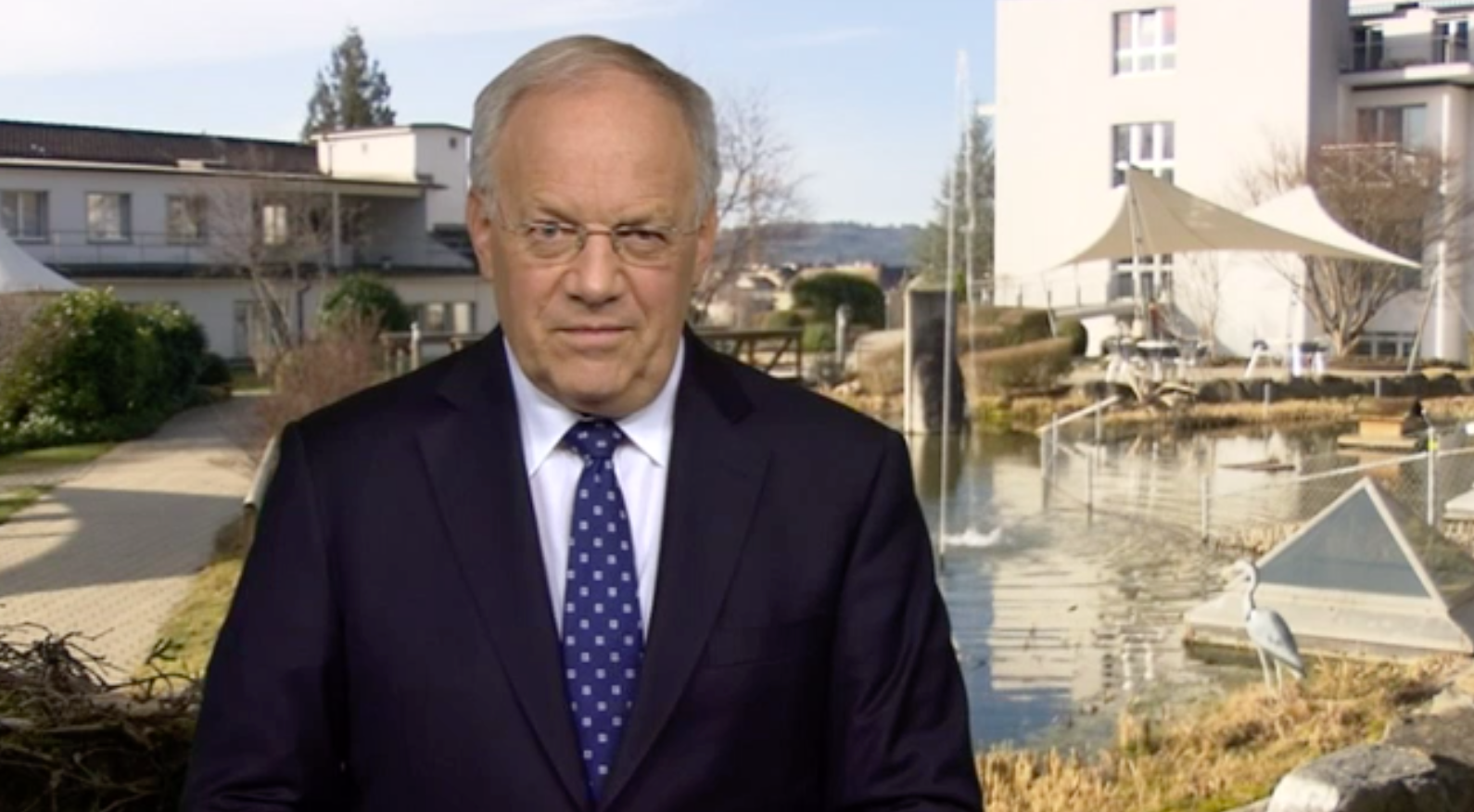
I have been asked two questions during my coaching and training sessions over the past month: What do I think of Presidential hopeful, Donald Trump, as a public speaker, and have I seen the video clip that went viral of the Swiss President, Johann Schneider-Ammann?
Fortunately I have views on both and they fit into one of my key mantra’s – make sure your three V’s are in line.
Let me explain.
If you want to convey your message effectively so that people remember it and act upon it, you must match your verbal, visual and vocal channels of communication. If one or more of these is out of synch, it can have disastrous results as the Swiss President found to his cost when his video message went viral.
I know you want to check this out, but bear with me for a couple of paragraphs and you can watch the video for yourself.
Back to the Swiss President.
He became a laughing stock when, during his speech on Switzerland’s annual day of the sick, he got it all wrong. He failed to match his tone and body language to his message. He wanted to say, that laughter is important for your health.
His delivery was so humourless that he was about as funny as a funeral director. When I showed the video to someone I was coaching, who does not speak French, he thought the President was announcing the end of the world; he looked so depressed.
Presidential wannabe, Donald Trump, has no such problems. His use of the three Vs is masterly. He emphasises the right words, varies his pace and tone and uses his hands to underline his message.
And his message is clear and simple. He uses words of mostly two syllables, short sentences and lots of repetition. It’s a message that may not be going down too well in Europe, but it is certainly resonating with many Americans and the American media.
Still, my top prize for using the three Vs goes to the incumbent President, Barack Obama. He connects emotionally with his audience through his vocal variety, purposeful body language and compelling storytelling.
The Swiss President could do no worse than look across the Atlantic and take a few tips. Or, of course, invest in some presentation training with many of the coaches, who must now be beating a path to his door.
Judge for yourself. Here are the links to the Swiss President and to Donald Trump.
The annual day that the Swiss President would rather forget.
Donald Trump in full flow.

by Claire Doole | Mar 8, 2016 | Blog
Recently, I was invited to a presentation at a lakeside hotel by a private Swiss bank. It had many of the ingredients for a successful public presentation – attention getting opening music, memorable visuals and three senior bankers with considerable financial expertise.
But one element was missing – what is in it for the audience? The presenters spent the first hour giving a history lesson on trade routes followed by a brief assessment of current trade relations.
The problem was that most of the audience – investors and would-be investors – already knew much of this. Some insights into the world economy and how it would affect their investments would have been more relevant.
Unfortunately, this was left to the last fifteen minutes. All we learnt was that China had overtaken the US as the world’s biggest economy, and that the Euro Swiss France exchange rate would not markedly change.
One of the biggest mistakes presenters make is not putting the interests of the audience at the heart of their presentations. You need to give them a reason to listen – the WIIFT – or what is in it for them.
If you explain clearly how what you are talking about affects them, you are more likely to get their attention. The better you do this, the better your chance of saying things they will follow through on.
How do you do this? You put yourself in their shoes. Most people are motivated by fear or reward. You need to think about the benefits. Will your presentation help them become more successful in business? Will it help them take some of the problems away?
Let’s apply this to my business – presentation training. Why should someone come on a course or take a coaching session?
I might say – presentation skills are an essential business skill. However, it will have more impact if I rephrase this with my audience in mind. You will win more business, influence senior people more successfully, build stronger relationships, better handle challenging clients and improve your chances of promotion.
Make sure the benefits apply to all of the audience. And that they hear it by using a flagging phrase:
- This is important to you because …
- What does this mean for you? (then tell them)
- Why am I telling you this? (then explain)
- Why should you care/listen? This will…
- Why does this matter? It matters because …
At the presentation in Geneva, I did not come away with a clear sense of what was it in it for me, or the audience. Although the excellent glass of wine was much appreciated!

by Claire Doole | Feb 3, 2016 | Blog, Writing
Psychologists have proven that we make major decisions about one another in the first seconds of meeting. This means you do not get a second chance to make a positive first impression.
This is also valid for your report or business plan. The executive summary is where your reader makes his or her first impression about your ideas, information or recommendations. Readers often make rapid decisions by just scanning it. This means your future could depend upon its quality.
Writing an executive summary takes time and effort. Basically, it needs to summarise the main points and conclusions or recommendations. It should answer these questions:
• What is the document about?
• Why is it important?
• What are your propositions or recommendations?
To get started, here are some guidelines to help when drafting text.
Keep it short. It shouldn’t be longer than two pages. As one business writer puts it “If you can’t sell your idea on paper in two pages, well then perhaps you need to reconsider your business idea.”
Use a simple and direct style. It should read like a standalone document giving the essentials, and, of course, do avoid jargon or technical terms unknown to your reader.
Begin with stating the purpose. Your audience may have a limited amount of time so they need to know this from the start.
Present the key points in the same order as they appear in the main document.
Highlight the results, conclusions, or recommendations. Be clear as you don’t want your readers trying to guess the outcomes.
Don’t insert information that is not in the main document.
Check to ensure your summary answers the following questions: Are the key messages evident? Are the main outcomes or recommendation included? Could my readers scan the summary without missing any necessary information? Is the summary compelling enough to persuade the reader to go through the full document?
The last stage is to proofread and edit for language and grammar. Nothing loses a reader’s interest more rapidly then spelling mistakes.
Executive summaries are not simple to write. They require a degree of creativity and a strong capacity to synthesize. To make sure you have got it right, ask a friend or family member to read your summary and tell you if it provides a clear overview and compels the reader to want to learn more.

by Claire Doole | Jan 5, 2016 | Blog
The emissions scandal continuing to engulf the German carmaker Volkswagen shows that no company, however large or well established, is immune to a crisis.
How a business or organization responds and communicates when things go wrong can mean the difference between limiting damage to reputation and causing more harm destroying years of brand building. The body language of Martin Winterkorn, former CEO, is an example of how not to appear in front of the world’s media when your company is in meltdown.
After rigging its vehicles to cheat on pollution tests, VW has seen its sales plummet and its reputation in tatters. The decision by the US Justice Department to sue VW will no doubt only exacerbate the situation.
History is littered with corporate crises and yet firms all too often fail to plan ahead. So how should you best prepare for the worst?
At Claire Doole Communications, we run courses on how to communicate in a crisis. Below are 5 of our top tips:
1. Prepare a communications plan before a crisis. We find that companies are often well prepared operationally for emergencies, but they don’t know what to do when the crisis affects reputation. They lack a robust crisis communications plan before a disaster strikes. A crisis communication plan should cover preparation, response, resolution and recovery.
2. Identify potential crises. Some crises may be internal such as job losses, legal cases, accounting scandals. Others may be external, such as a natural disaster or criticism by key stakeholders. It is important to recognize the type of crisis you are facing as this will help to pinpoint the groups of people you will need to communicate with.
3. Put people in place. Assemble a team, which includes senior management and communications staff who have been media trained. Once a crisis breaks the chief executive should first take ownership of the crisis and speak to the media before handing over to the crisis team.
4. Get information. Communicate from an informed position and separate fact from rumour. Become the source of reliable information and keep the information flowing.
5. Commit to learn lessons. You can recover from crises and emerge stronger, if you demonstrate that you have learnt your lesson. Communications in recovery mode need to be based on substance not spin. Remember actions speak louder than words.
Claire Doole Communications runs crisis communications courses for companies and organizations. For more information see www.doolecommunications.com.

by Claire Doole | Nov 2, 2015 | Blog
We all overestimate how much people remember of what we say.
Studies show that when people are asked what they recall immediately after an evening’s broadcast, very few spontaneously remember more than two news items. And these are newsworthy stories presented by professional broadcasters!
So how can you make sure that your messages are memorable? One of the most powerful methods is to use a STAR moment – include in your presentation “something your audience will always remember.”
Neuroscientists and cognitive psychologists say that good storytelling emerges from “violations of expectations.” The STAR moment does exactly this, surprising and hooking the audience’s attention so your message sticks.
Take a look at a famous STAR moment by Bill Gates, who in his TED talk opened a jar filled with mosquitos while talking about malaria to a room filled with potential donors.
I used this example while giving a 20-minute master class in Geneva on managing audience attention span.