
An End to “Manels” and “Manferences” – a Moderator’s View
I vividly remember getting criticised on Twitter for moderating two “manels” – all male panels – during a half-day event at the European Parliament in Brussels some years ago. It would have been a “manference” – a conference where only men speak – if the organisers hadn’t remembered to invite one woman to give a presentation.
The organisation, EU Panel Watch, was right to criticise. I should have refused to moderate the all male panels. Unfortunately, moderators rarely get a say in the selection of speakers. I now advise clients on how to design panels and conferences which are diverse, balanced and engaging – these are the principles I applied when editing BBC radio and TV news programmes.
Still EU Panel Watch’s latest annual report on women’s representation and speaker diversity on policy panels in Brussels shows change is slow and much more effort is required.
In 2018, out of 1583 speakers at conferences the organisation monitored in the “Brussels bubble”, only around one third were women – this held true for panels and keynote speeches. Shockingly, 26% of panels were all men and three quarters of them also had a male moderator. At these rates, EU Panel Watch estimates we can expect to see gender parity in 80 years!

The organisation recommends that event organisers take a pledge to never organise an all male panel, and strive for a diverse list of speakers to reflect wider societal views and standpoints.
It’s a pledge that hundreds of diplomatic missions, international organisations and NGOs have taken as part of the Geneva-based International Gender Champions initiative. In their words “50 per cent of the population warrants the same visibility as the other 50 per cent.”

However, event organisers have told me it can be difficult to find women with the right expertise and status – no doubt a consequence of the glass ceiling that women experience in many professions.
At a recent medical conference where I was training moderators, women said all male panels were a systemic problem in their field. They feared this would put off young women from joining the profession and contribute to undermining the credibility of women in science in general. A fear confirmed in an analysis by Nature magazine. The piece documents eight years of medical panels and concludes by pointing out that the situation is improving, yet it is easy to fall back into old habits.
The article also points out that while it is important to invite women to speak, it is more important to listen to them.
The women at the medical conference told me about the gender discrimination happening there. One female colleague witnessed a male co-facilitator trying to muscle in both physically and verbally to take over from the female co-facilitator. In another panel, two male moderators were patronising towards the two female speakers – an observation she said were shared by other women in the sessions.
This unacceptable behaviour only underlines the importance of the moderator ensuring all speakers get equivalent speaking time and challenging those who interrupt or talk over other speakers. Men who dominate the discussion or who are sexist have to be held to account
Change can happen
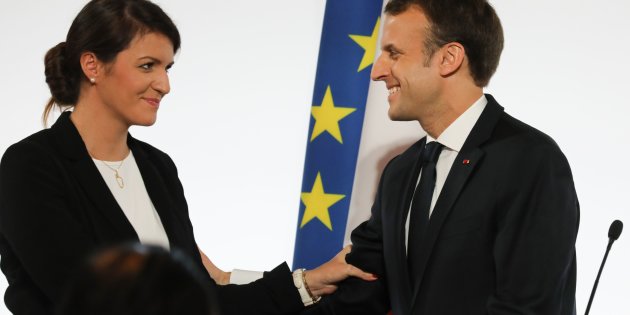
A few months before Emmanuel Macron became President of France, he was on a panel I was moderating on gender parity. During the discussion, I gave him the card of a women I had met at the conference who was a gender parity expert. His team invited her afterwards to speak at his En Marche political rallies.
The current gender imbalance on panels and at conferences mirrors the gender gap in wider society. That is why UN Gender Champions asks not only for a pledge for panel parity from member organisations, but also for two commitments to move gender equality forward in their institution.