by Claire Doole | Jan 12, 2026 | Blog
Organising an event should be like cooking a great meal: a careful balance of technical know-how and creative flair. Get the mix right and your guests leave satisfied, inspired, and possibly asking for seconds. Get it wrong… and you’re serving up something bland, or overcooked.
Sadly, many organisers fail to find the right ingredients. They over-season with PowerPoint presentations, dilute the panels with speakers who lack incisive insights, and wonder why the audience sneaks out before dessert.
But last year, the organisers of one of the most enjoyable events I moderated absolutely nailed the recipe. They served up the right blend of policy substance and creative flair.
So, let me share what made this event so deliciously satisfying.
The Dish: The ALMA Journey
The ALMA (Aim, Learn, Master, Achieve) journey celebrated the achievements of young people not in employment, education, or training who had taken part in a transformative European Commission programme, working for a short period in another European country. In short: a meaningful initiative, a powerful story — and the perfect base ingredient.
Here, in 8 easy steps, is their recipe for success.
rong>Ingredients & Method
1) Keep a clear head and focus. The organisers kept the spotlight firmly on the added value of ALMA from the young people’s perspective. They weren’t garnish — they were the main course.
2) Do what it says on the tin. The title “The ALMA Journey:results, reflections and the road ahead” matched the content.
3) Add the policy ingredients — sparingly. Panels, keynotes, presentations, fireside chats:all essential staples. But served short and sweet. Think tapas, not an all-you-can-eat buffet of slides.
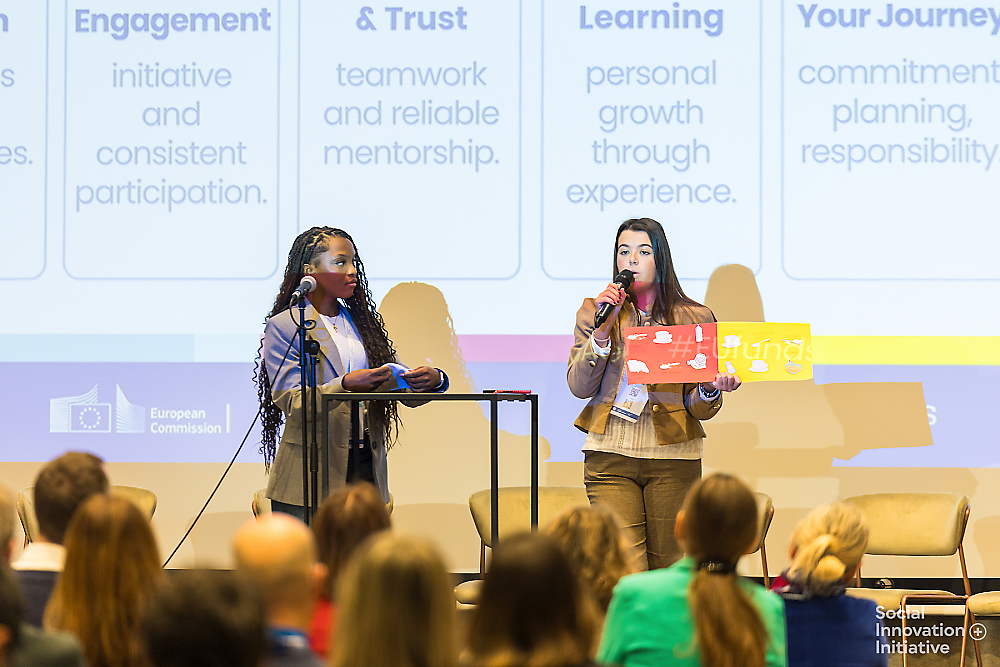
4) Sprinkle generously with humour. Two young Poles brought the house down with a stand-up comedy routine about their ALMA experience. Proof that laughter is not only allowed at policy events — it’s an essential ingredient
5) Combine insights with creativity. Two young Spaniards offered their own six-step recipe for success: courage, active engagement, collaboration, continuous learning, commitment, and a positive mindset. Nutritious and inspiring.
6) Stir in time for interaction and networking. The audience moved between sessions where project operators from across Europe shared successes, challenges, and future visions. It is important after all not to leave the audience seated for too long!
7) Appeal to the senses. A Portuguese teenager had the audience on their feet, singing about how those on the ALMA journey are “the heroes of themselves — body and soul.” It was the icing on the cake!
8) Garnish with professional moderators. Moderators who seamlessly linked sessions, engaged the audience, and — crucially — kept everything on time. Because even the best meal loses its appeal if it drags on too long.
Chef’s Tip
Like all good recipes, this one works best with preparation and practice. The organisers left no stone unturned:briefing calls with panellists, clear roles for moderators, and no assumptions that things would “just work.”
The result? An event that showed how daring to be different, innovating with formats, and putting people firmly at the centre can create a truly shared — and memorable — experience.
Bon appétit!
by Claire Doole | Nov 3, 2025 | Blog
From the time humans gathered around a fire, our minds have been drawn to stories. It’s instinct — the way our brains lean forward when a tale begins, eager to connect, to feel, and to imagine what comes next. Stories don’t just entertain us. They move us and inspire us.
I am always struck by it – rooms filled with overcomplicated PowerPoint slides and speakers piling on facts like bricks, rather than telling a good story whose emotional pull, if well told, we will always remember.
Below are three examples of good storytelling during an event that I hope will inspire you to tell more stories.
1) Stories on panels: At Geneva Peace Week, I helped the Women’s International League for Peace and Freedom design a panel where the speakers were asked to share their stories with the audience. The team created a space for the audience to think differently and listen deeply. People were shown to their seats by torchlight. They listened in darkness to an audio recording we created to mark an event in history, and then the moderator went on stage.
She turned on the light next to her and asked each speaker one by one to
turn on their side light and tell a 3-minute story before she moderated a
discussion. It was a STAR panel (something they will always remember).
2) Stories for the concluding panel: As a moderator, I know it can be challenging to keep the attention of the audience right to the end. A woman whom I have been training to moderate used storytelling to great effect at a recent international environmental conference. She told a story in her introduction and asked the audience to tell a story to their neighbour about something that had given them hope during the event. She then asked the panellists to do the same.
The story she told was made famous by the environmental activist, Wangari Maathai – Kenyan environmental activist and the first African woman to receive the Nobel Peace Prize. Wangari told the story of the hummingbird, which, in the face of a raging forest fire, did not despair but took action by carrying drops of water in its beak to put out the fire. She believed that everyone could make a difference, no matter how small their actions seemed. You can watch it here.
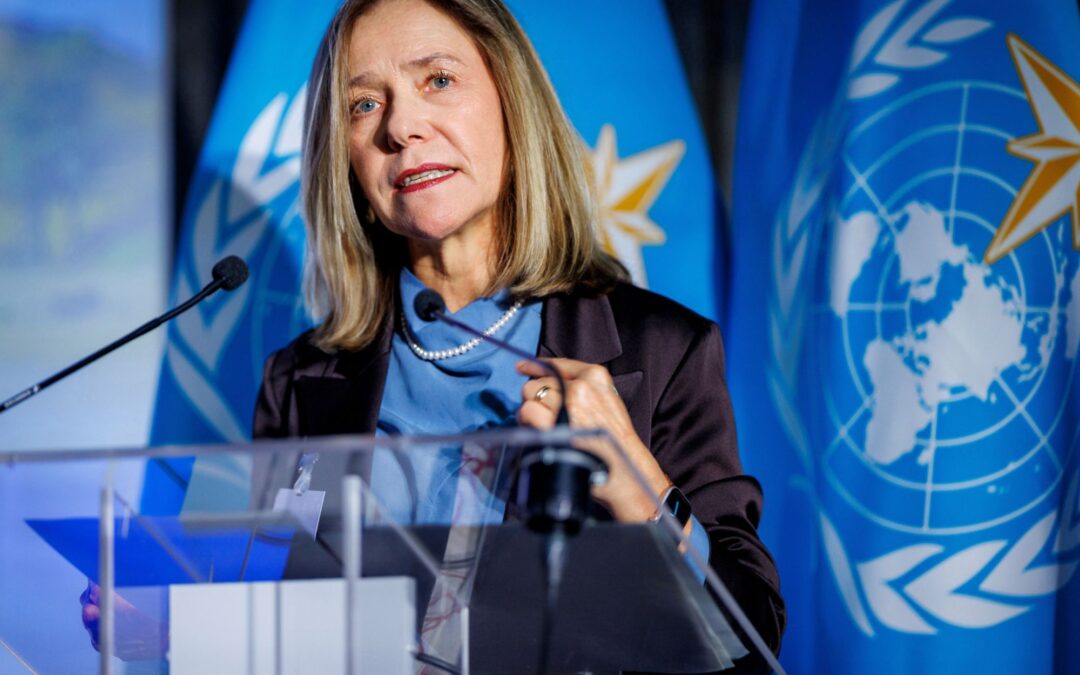
3) Stories in closing remarks: Wrapping up an event can be tricky — trying to distil hours of discussion into a few meaningful closing remarks. At an event I moderated last week, the Secretary General of the World Meteorological Organization, Celeste Saulo, chose a different path. Instead of listing key points, she told a story — one that conveyed why the world needs the WMO and resonated far more deeply with the investors in the room.
She told the story of Melissa, the category 5 tropical storm that hit Jamaica. “Melissa will break many records”, she said, “But the loss of life will be minimized thanks to international collaboration built on shared data and trusted systems.” You can see the full speech here – a great example of how to use stories to inspire and motivate.
(link https://wmo.int/content/closing-remarks-investors-forum)
A sought-after conference moderator, Claire helps clients design impactful events, trains in how to moderate and also in how to use stories to get your message across.
Photo courtesy of Marc Bader.