by Claire Doole | Mar 10, 2024 | Blog
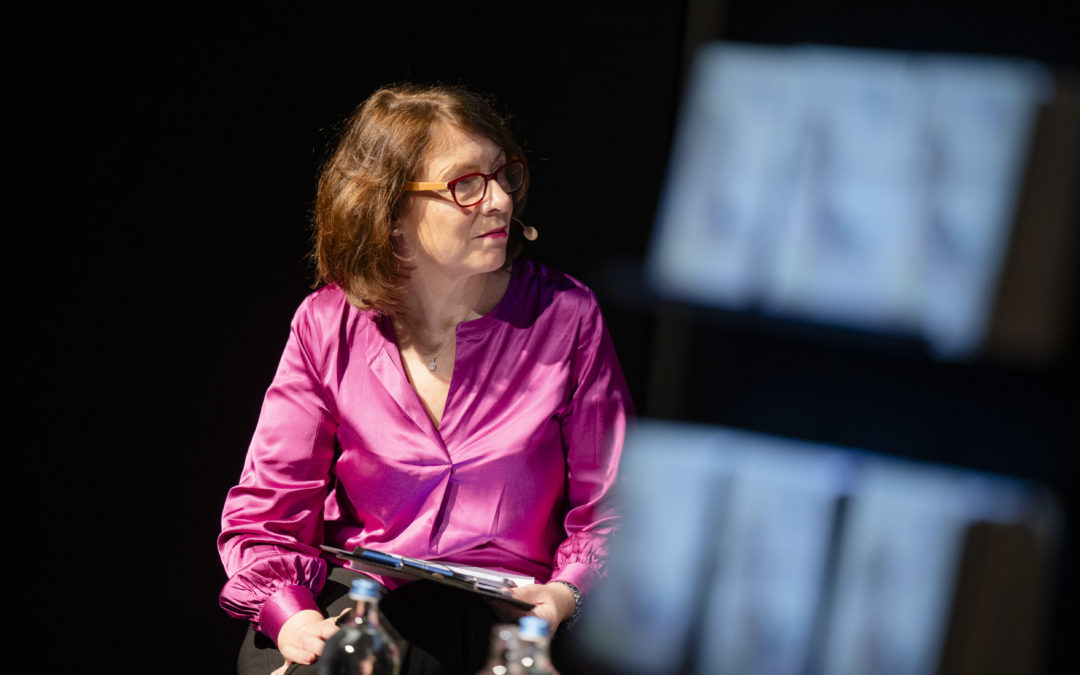
Someone asked me this week to explain the role of a panel moderator.
I replied that it was to facilitate an insightful discussion for the audience. Remember them? The most neglected part of an event except when organisers panic the room might not be full.
Unfortunately, engaging debates are sometimes very difficult to achieve when you are brought in at the last moment and the panelists have already been selected by the organisers for political or PR reasons. It is like trying to bake a great cake with the wrong ingredients.
Drawing on decades of experience and a lot of patience, I usually manage after speaking individually to each panelist to construct a flow and exchange between the panelists, that is engaging and insightful. Of course, the discussion is compromised in terms of depth as I have to loop in people who either don’t want to address the theme of the panel or don’t have the knowledge to do so.
There seems to be a view by some organisations – the more panelists the merrier, as this shows how well-connected and influential, they are. However, this leads to frustration all around – from the panelists themselves, who have less time to get their points across, from the moderator who has to keep the discussion at a relatively high level and the audience, who most probably have learned nothing they don’t already know.
Of course, some audiences also just want to say they have attended a conference and don’t care what was said. But many I speak to say they don’t like self- promotional panels where the speakers only talk about their organization and don’t engage with the theme of the panel. This may be the reason why organisers tell me audience numbers are down for both in-person and online events.
In my view less is more. Conference organisers should spend their time organising insightful audience-centric events where they involve the panel moderator from the start of the process.
Most professional moderators, like myself, have a broadcasting background. For many years I produced, presented, and edited programmes on BBC radio and TV. We can help you find the focus for your event, develop pertinent angles, and provide ideas for creative innovative, and interactive formats that will engage the audience, give them great new insights, and enhance your reputation and visibility.
Claire Doole moderates events and trains people in how to moderate and design engaging audience centric and insightful events and panel discussions.
by Claire Doole | Jan 21, 2024 | Blog, Moderating
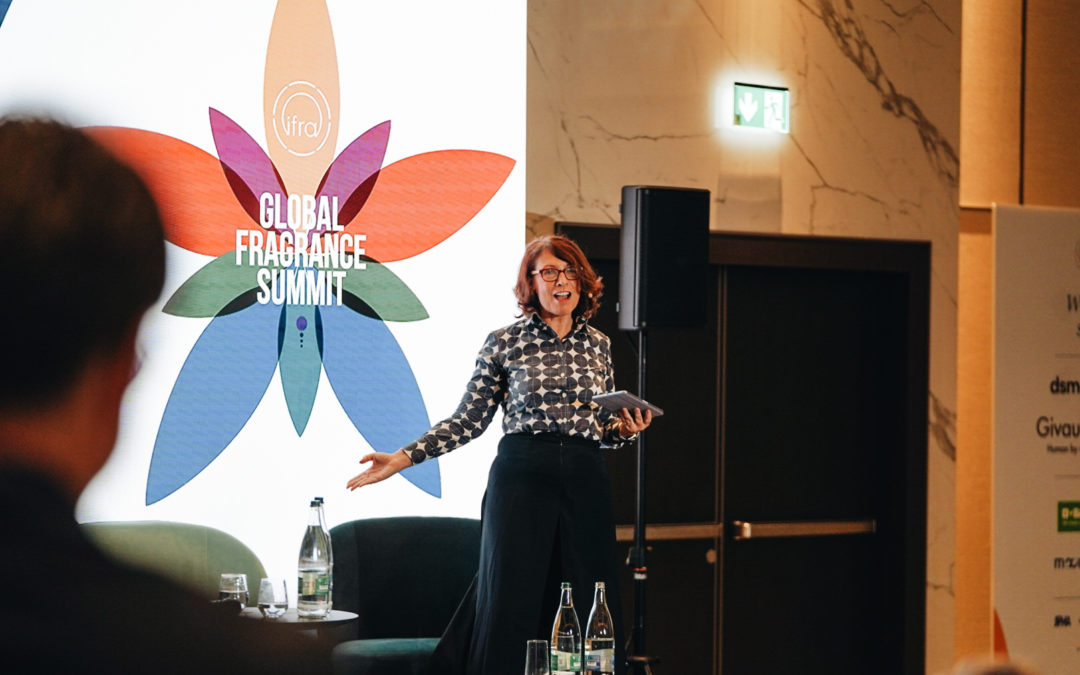
The sense of smell, as I realised while preparing to moderate the Global Fragrance Summit last month, is one of the most powerful of the senses. It not only evokes memories and shapes emotion but also lowers stress. However, it is also one of the most under-appreciated.
Preparing to moderate this event, as well as many recent engagements made me reflect that there is another sense that is also powerful but underused – the editorial sense.
It is a sense that is particularly useful when designing an event and vital when briefing a professional moderator. A professional moderator brings many skills to the table from stage/screen presence to an ability to engage with the audience and keep an event to time.
But if you want a professional panel moderator to steer the discussion, bring out insights from the speakers and to ensure the success of your event, you need to give them an in-depth editorial briefing as they are not subject experts.
Briefing a professional panel moderator
Before you have a briefing call with the panel moderator, send them a briefing document to read beforehand so they can ask informed questions. Often, all I am given is the draft agenda which has the title of the panel and sometimes if online a couple of explanatory lines.
Furthermore, the title is often too broad and lacks focus, such as the triple planetary crisis or the just energy transition. It should ideally include a question such as how do we ensure that the energy transition is fair and equitable for the rural poor?
A well-structured briefing document should include:
• Event purpose: Why are we holding this event? What do we want to achieve?
• Panel discussion objective: Define the objective of the panel discussion. Is it to share best practices, introduce new tools and techniques, find solutions to a pressing problem, build relationships, or hear different perspectives on a common challenge.
• Topic, premise and title: Identify a topic that is top of mind for the audience, for example Artificial intelligence and a premise – a proposition or assertion such as AI the unintended consequences. Then you have to find an intriguing title – AI – the case for a global system of governance or who should regulate AI?
• Key discussion questions: Clearly outline the key questions the panel will address.
• Speaker overview: Identify speakers, explain why they were selected and outline their views on the theme.
• Narrative structure: Define the planned and organised flow of the conversation that the panelists will have during the event. As detailed in a previous blog, the narrative structure involves creating a coherent and engaging flow of topics that guides the discussion from the beginning to the end. This structure is designed to ensure that the panel covers key points, addresses the main objectives of the discussion, and maintains the interest of the audience.
• Content of keynote speeches: Clarify what keynote speakers or presenters will cover before the panel discussion. This is important so that the panel doesn’t repeat what has already been said but builds on it.
Role of guiding questions
Guiding questions for each speaker are always useful. However, these should not be written, as is often the case, in policy or corporate speak, as the moderator has to make them their own. Keep in mind that the panel is a conversation, not a lecture.
Similarly, these questions are often written as If the moderator will ask a series of questions to one speaker before moving on to the next speaker. This is not a panel discussion but an interview. The moderator’s responsibility is to structure the discussion so it has editorial coherence bringing in the right speaker at the right time.
And keep in mind that once you have drafted the briefing document and shared with the moderator, the next step is to facilitate communication between the professional moderator and speakers. Their editorial sense will come into play, constructing a dynamic panel discussion that aligns with objectives and captivates the audience with both insight and entertainment.
If you would like to book Claire to moderate at your event, learn how to moderate yourself, or hone your public speaking, speechwriting, storytelling or media interview skills, contact me here or link in with me!